

 United States
 Macau, China
 France
 Philippines
 Singapore
 Netherlands
 United Kingdom
 Canada
 Argentina
 Germany
 Estonia
 Peru
Peru Russia
 Australia
 South Africa
 Nigeria
 Malaysia
 Singapore
 India
India Finland
 China
China Ukraine
 Hong Kong
 Cyprus
 Turkey
 Greece
 Sweden
 South Korea
 Mexico
 Poland
 Ireland lottery results
 New Zealand lottery results
 Puerto Rico lottery results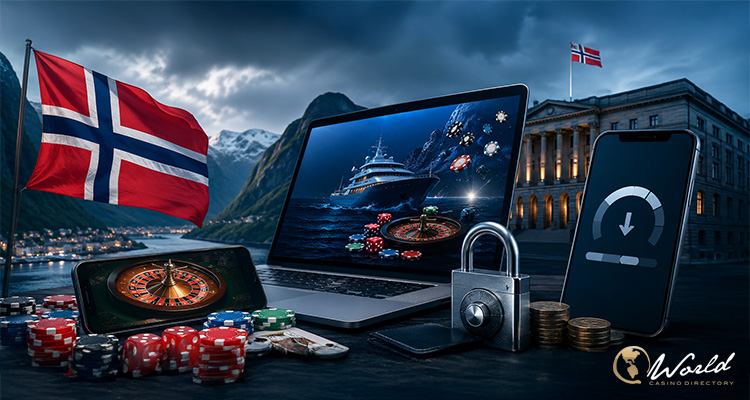
Norway’s state gambling monopoly has introduced tighter deposit limits in a bid to curb problem gambling — but the measure appears to be driving players in the opposite direction. Faced with shrinking allowances and a limited game catalogue at home, growing numbers of Norwegians are turning to new online casinos in Norway operated beyond the reach of domestic regulators.
Deposit Restrictions Drive Players Offshore
As Norway’s sole legal online gambling operator, Norsk Tipping has long drawn criticism for its limited game catalogue and lack of competitive bonuses. Its latest round of deposit limit reductions — introduced as a responsible gambling measure — has intensified that dissatisfaction. Industry observers say the restrictions are producing an unintended consequence: pushing higher-value players toward international platforms that face no equivalent constraints.
Offshore Casino Market Expands to Fill Domestic Gap
International casino operators are actively targeting the Norwegian market, offering broader game libraries, regular promotions, and features absent from the state platform. Despite government efforts to block access to unlicensed sites and restrict associated payment channels, Norwegian players are circumventing these barriers through VPNs, alternative payment services, and increasingly, cryptocurrency.
The trend mirrors regulatory shifts already seen in neighbouring markets. Sweden and Denmark — both of which previously operated monopoly models similar to Norway’s — have since moved to licensed, competitive frameworks, concluding that regulated competition offers stronger consumer protections than an outright state monopoly.
Cryptocurrency Emerges as Key Payment Channel for Norwegian Gamblers
Norway ranks among Europe’s highest adopters of cryptocurrency for online gambling. As conventional banking channels face tighter government scrutiny, digital currencies have become a practical workaround for players seeking access to offshore casinos. Many international operators now explicitly support crypto deposits and withdrawals for the Norwegian market, with dedicated crypto exchanges and custodial services reporting increased uptake.
Analysts attribute this to Norway’s combination of high digital literacy and disposable income — factors that make its population particularly attractive to international gambling brands and particularly adept at navigating regulatory restrictions.
Government Monopoly Model Under Scrutiny
Norwegian authorities maintain that the single-operator model best serves public health objectives. However, the model is facing mounting criticism as evidence grows that it is failing to retain domestic players. Critics argue that prohibitive measures without competitive alternatives are creating an unregulated shadow market rather than reducing gambling activity.
The paradox facing regulators is stark: each measure designed to tighten control appears to strengthen the offshore market it is intended to contain. Unless Norway undertakes structural reform of its gambling framework, industry analysts expect the outflow of players to international platforms to continue.
Offshore Competition Expected to Intensify
Market forecasts point to continued growth in offshore casino activity targeting Norwegian players. Operators are increasingly localising their offerings — adding Norwegian-language interfaces, NOK payment support, and promotions tailored to domestic preferences — in a direct response to unmet demand.
Without a regulatory overhaul, Norway’s online gambling landscape is set to become more fragmented: a constrained domestic monopoly on one side, and an expanding, competitive offshore sector on the other.
