

 United States
 Macau, China
 France
 Philippines
 Singapore
 Netherlands
 United Kingdom
 Canada
 Argentina
 Germany
 Estonia
 Peru
 Russia
 Australia
 South Africa
 Nigeria
 Malaysia
 Singapore
 India
 Finland
 China
 Ukraine
 Hong Kong
 Cyprus
 Turkey
 Greece
 Sweden
 South Korea
 Mexico
 Poland
 Ireland lottery results
 New Zealand lottery results
 Puerto Rico lottery results
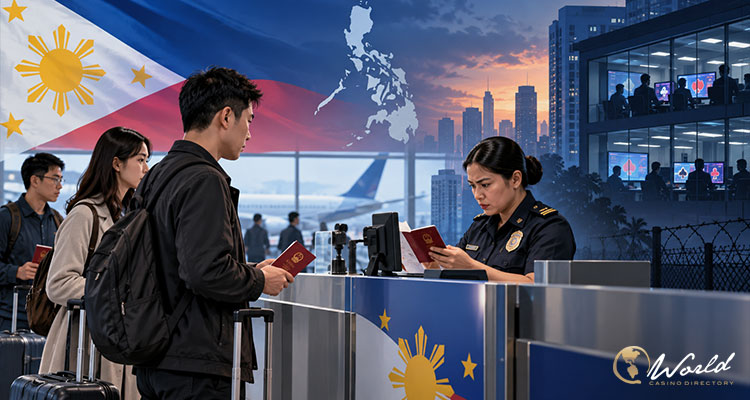
The Philippines will review its visa-free entry arrangement for Chinese nationals after raids on suspected illegal offshore gaming operations raised concerns that the policy could be exploited to facilitate criminal activities.
Malacañang Palace press officer Claire Castro said the Department of Foreign Affairs (DFA) had been asked to assess whether the 14-day visa-free arrangement was creating risks for the country. The referral followed enforcement operations that resulted in plans to deport 101 foreign nationals, including 82 Chinese citizens who allegedly entered the Philippines under the scheme.
The review comes as the government continues efforts to eliminate illegal Philippine Offshore Gaming Operator (POGO) activities following the country’s prohibition of offshore gaming operations. Authorities have continued to investigate suspected operations despite the ban, which followed concerns about criminal activity associated with the industry.
Speaking at a Tuesday briefing, Castro said the government wanted to establish whether the entry policy was being misused. “Because of that, I have already raised with the DFA the possible issues concerning visa-free entry for our Chinese friends,” she said according to Inside Asian Gaming. “The DFA will look into the issues and determine whether the arrangement is having adverse effects, particularly whether it is being exploited to commit crimes in the Philippines.”
The assessment could affect a travel arrangement that the tourism sector has considered expanding to additional entry points. Chinese nationals currently qualify for 14 days of visa-free entry through Ninoy Aquino International Airport in Metro Manila and Mactan-Cebu International Airport in Cebu.
Raids prompt scrutiny of visa-free arrangement
The DFA referral followed separate enforcement operations targeting suspected illegal offshore gaming sites. One raid took place in Zamboanga Sibugay, on the southern island of Mindanao, while another operation was conducted in Makati City, Metro Manila. Authorities announced plans to deport 101 foreign nationals following the operations in Zamboanga Sibugay, including 82 Chinese nationals who allegedly entered and remained in the country using the 14-day visa-free arrangement. The alleged connection between the entry policy and illegal gaming activities remains the subject of the proposed review.
The raids also highlight continuing enforcement challenges after the Philippines prohibited offshore gaming. Although the POGO industry was initially established to make the country a centre for licensed offshore gambling, authorities later associated illegal operations with serious crimes, including trafficking, kidnappings and scams.
The POGO category, previously licensed by the Philippine Amusement and Gaming Corp (PAGCOR), has since been abolished. However, reports of suspected operations continuing after the prohibition have prompted further action by law-enforcement agencies.
Former Presidential Anti-Organised Crime Commission spokesperson Winston Casio previously said POGO-style activities had persisted in parts of the country despite the government ban. Castro reiterated that President Ferdinand Marcos Jr. wanted authorities to eliminate remaining illegal operations.
“If there are illegal Pogo operations, we know that the PNP [Philippine National Police] and CIDG [Criminal Investigation and Detection Group], together with the PAOCC [Presidential Anti-Organized Crime Commission], are taking action,” Castro said.
She added that the government expected enforcement agencies to identify illegal activities and hold those responsible accountable. “The president’s order is to crack down on smuggling. Whatever illegal activities are being carried out in Philippine territory must be identified, and those responsible must be held accountable. Authorities must not stop until these criminal activities are completely eradicated,” she said.
Offshore gaming ban remains central to enforcement
The review of visa-free entry takes place against the background of legislation intended to end offshore gaming operations in the Philippines. Marcos signed an order banning offshore gaming in November 2024, citing national security and public order concerns. The prohibition was implemented by December 2024, before legislation formalised the ban in 2025.
In October 2025, Marcos also signed into law a measure prohibiting all offshore gaming operations. The legislation cited the industry’s social costs and associated criminal activities, which the government considered to outweigh its economic contributions.
Under the law, work permits and visas held by people engaged in offshore gaming operations are considered cancelled. The provision covers POGO employees, gaming content providers and accredited service providers.
Reports from the Tuesday briefing also indicated that Castro warned enforcement efforts could be reversed if a future administration chose to support offshore gaming. Her remarks underscored the government’s stated intention to sustain the current policy.
Tourism expansion plans face additional scrutiny
The visa-free arrangement has also attracted attention from tourism officials seeking to increase Chinese visitor numbers.
Tourism Secretary Dita Angara-Mathay recently expressed interest in extending the scheme to additional entry points, including Clark Freeport Zone. The proposal followed reported growth in Chinese arrivals during 2026.
The DFA’s review introduces a security assessment into discussions about that potential expansion. Officials will need to determine whether the existing arrangement has adverse effects and whether individuals are using it to facilitate criminal activity.
The government has not announced any change to the current visa-free policy as a result of the referral. The immediate focus remains on examining possible abuse while continuing enforcement against suspected illegal gaming operations.
