

 United States
 Macau, China
 France
 Philippines
 Singapore
 Netherlands
 United Kingdom
 Canada
 Argentina
 Germany
 Estonia
 Peru
Peru Russia
 Australia
 South Africa
 Nigeria
 Malaysia
 Singapore
 India
India Finland
 China
China Ukraine
 Hong Kong
 Cyprus
 Turkey
 Greece
 Sweden
 South Korea
 Mexico
 Poland
 Ireland lottery results
 New Zealand lottery results
 Puerto Rico lottery results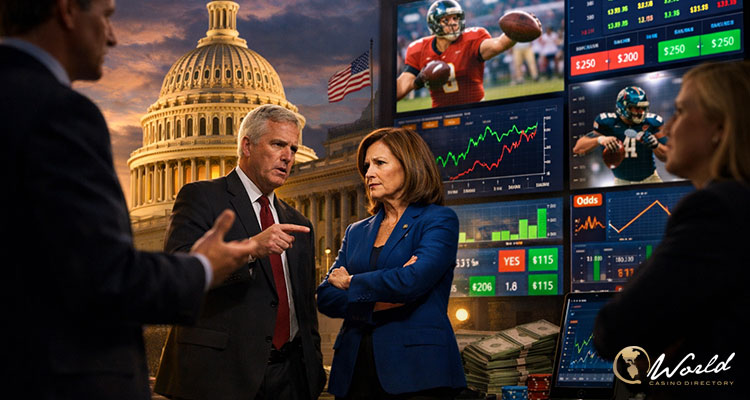
A bipartisan group of U.S. senators is preparing legislation aimed at stopping prediction market platforms from offering contracts tied to sporting events and certain gambling-style activities. The proposal reflects growing tension between federal regulators and state authorities over how these platforms should operate.
Senators Adam Schiff of California and John Curtis of Utah plan to introduce the bill, which would amend the Commodity Exchange Act. The measure targets companies overseen by the Commodity Futures Trading Commission (CFTC), including platforms such as Kalshi and Polymarket, preventing them from listing or facilitating transactions connected to sports outcomes or casino-like games.
Schiff, cited by The Wall Street Journal, criticized the current regulatory approach, stating, “The CFTC is greenlighting these markets and even promoting their growth. It’s time for Congress to step in and eliminate this backdoor, which violates state consumer protections, intrudes upon tribal sovereignty and offers no public revenue.” He also emphasized that “Sports prediction contracts are sports bets — just with a different name,” adding that “These contracts are currently offered in all fifty states in clear violation of state and federal law.”
Federal Proposal Targets Expanding Market
Prediction markets have grown rapidly in the United States, attracting billions in trading activity. During this year’s Super Bowl, trading volume surpassed $1.2 billion in a single day and reached more than $4.5 billion over the course of the week. Companies in the sector have also seen significant investor interest, with reports indicating that Kalshi recently achieved a valuation of $22 billion, while Polymarket is pursuing similar levels.
These platforms allow users to place yes-or-no wagers on a wide range of events, including politics, weather, entertainment, and sports. However, sports-related trading accounts for a substantial portion of activity, placing prediction markets in direct competition with established betting operators such as FanDuel and DraftKings.
The proposed legislation would block any CFTC-registered entity from offering contracts related to “any sporting event or athletic competition.” It would also prohibit contracts tied to games typically found in casinos, including poker, blackjack, slot machines, and bingo.
Curtis highlighted concerns about the social impact of these products, saying, “Too many young people in Utah are getting exposed to addictive sports betting and casino-style gaming contracts that belong under state control, not under federal regulators.” He added, “The Prediction Markets Are Gambling Act is about respecting states’ authority, protecting families, and keeping speculative financial products out of spaces where they don’t belong.”
Regulatory Disputes Intensify
The legislation arrives amid ongoing disputes between federal agencies and state governments. The CFTC has argued that it holds exclusive authority over event-based derivatives, including those tied to sports. In February, the agency submitted a legal brief asserting that states lack jurisdiction over these platforms.
State officials have pushed back. Nevada recently secured a temporary restraining order blocking Kalshi from offering contracts linked to sports, elections, and entertainment. Arizona has taken legal action as well, filing criminal charges against companies associated with Kalshi for allegedly operating without a license. The company has denied the allegations and urged the state to withdraw the case.
Other states, including Massachusetts and Michigan, have also pursued legal challenges, arguing that prediction markets effectively offer unregulated sports betting. In response, some platforms have filed lawsuits to prevent enforcement of state gambling laws, maintaining that federal oversight should take precedence.
Industry Pushback and Broader Concerns
Companies in the sector have warned that restricting regulated platforms could drive users toward unregulated alternatives. A spokesperson for Kalshi, Elisabeth Diana, said, “Banning sports on regulated prediction markets would just push this behavior offshore, where no regulation exists. It’s clear this bill is motivated by casino interests that are threatened by competition.”
Beyond legal disputes, the rise of prediction markets has raised concerns about insider trading and data misuse. In one case, an employee at OpenAI was dismissed following allegations of placing bets tied to advance knowledge of company announcements. Other incidents, including wagers related to geopolitical events, have prompted questions about national security implications.
Professional sports leagues have taken mixed positions. While many have embraced traditional sports betting, some remain cautious about prediction markets. Major League Baseball recently reached an agreement with Polymarket, granting access to league data and branding while establishing measures to monitor betting activity. At the same time, concerns persist about the potential for manipulation or misuse of insider information.
Broader Legislative Efforts Underway
The new proposal is part of a wider push in Congress to address prediction markets. Several other bills introduced in recent weeks aim to limit contracts tied to sensitive topics such as war, government actions, and elections. Lawmakers supporting these efforts argue that financial incentives linked to such events could create risks for public institutions and democratic processes.
As debate continues, the question of whether prediction markets fall under federal financial regulation or state gambling laws remains unresolved. The outcome of this legislative effort could shape how the rapidly expanding industry operates across the United States.
