

 United States
 Macau, China
 France
 Philippines
 Singapore
 Netherlands
 United Kingdom
 Canada
 Argentina
 Germany
 Estonia
 Peru
Peru Russia
 Australia
 South Africa
 Nigeria
 Malaysia
 Singapore
 India
India Finland
 China
China Ukraine
 Hong Kong
 Cyprus
 Turkey
 Greece
 Sweden
 South Korea
 Mexico
 Poland
 Ireland lottery results
 New Zealand lottery results
 Puerto Rico lottery results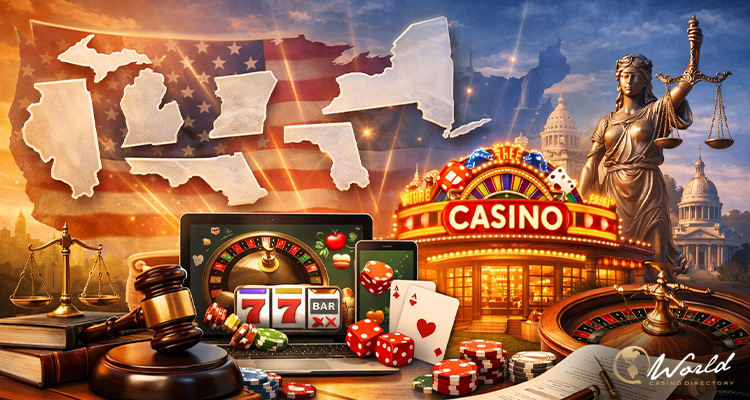
Lawmakers in several U.S. states have reintroduced or advanced online casino legislation in early 2026. They are reopening debates over whether to expand regulated digital gambling beyond the handful of jurisdictions where it is currently permitted. As established markets such as Michigan and New Jersey continue to generate strong revenue, lawmakers in states including New York and Virginia are reexamining whether similar frameworks could produce comparable economic benefits.
At present, seven states have legal online casino markets, and Maine is set to become the eighth as lawmakers recently passed a bill that would grant online casino rights. The measure now awaits final procedural steps that will determine whether regulated gaming can begin in the state.
One reason states are reconsidering iGaming is the size of the regulated revenue already being generated elsewhere. In New Jersey, total gaming revenue hit a record $6.98 billion in 2025, with online casino and internet gaming revenue reaching nearly $2.91 billion. This is a 22% increase compared with 2024 and the first year that internet gaming revenue outpaced land-based casinos in the state’s history.
This level of revenue has direct implications for state budgets. Higher gaming revenue translates into taxes that can be applied to public services, infrastructure and other programmes without raising general tax rates, a point proponents of iGaming often highlight in legislative debates.
New York lawmakers return to online casino proposals
In New York, lawmakers have reintroduced online casino legislation as part of renewed iGaming efforts during the 2026 session, continuing a push that has resurfaced multiple times in recent years. According to Gambling Insider, similar proposals have been debated in prior sessions but failed to advance amid political resistance and broader concerns about gambling expansion.
Supporters of the latest bill argue that regulated online casino gaming could provide a new source of tax revenue, pointing to the strong performance of New York’s mobile sports betting market since launch. They also highlight the potential benefits of a clearer regulatory framework covering licensing standards, payment processing and responsible gambling obligations.
Opposition remains, however. Lawmakers critical of the proposal continue to raise concerns around problem gambling, ease of access, and the possible impact on existing land-based casinos. While the legislation has returned to the agenda, there is currently no indication that it has sufficient support to move beyond early committee consideration.
Virginia revisits iGaming as part of broader gambling policy
In Virginia, lawmakers have made incremental progress this year on proposals that would expand the state’s regulated gambling framework to include online casino gaming. A bill to authorise licensed internet casino operators has advanced out of committee with added provisions addressing responsible gambling practices and consumer protections, including funding for problem gambling services and clearer oversight requirements. Supporters say these additions are intended to respond to concerns raised in earlier sessions when similar bills stalled.
Despite the committee movement, the measure still faces broader legislative hurdles, and political consensus on full online casino authorisation remains uncertain. Observers note that because Virginia already regulates online sports betting, implementing iGaming could involve fewer structural adjustments than in states without any regulated digital wagering, but significant debate is still expected before final approval.
Hawaii signals a shift in long-standing opposition
In Hawaii, lawmakers have reopened long-standing debates about gambling regulation despite a history of prohibiting all forms of legal wagering. In the 2026 session, multiple measures have been introduced, which would establish a casino gaming system with licensing, oversight and tax rules, and other bills that would update the legal definition of gambling. A newly formed Tourism and Gaming Working Group is also studying the state’s options amid persistent illegal wagering activity, reflecting a tentative shift in tone even though significant legal and cultural barriers remain.
Other states remain under observation
Beyond New York, Virginia, and Hawaii, several other states continue to be monitored by industry observers. Illinois and Massachusetts, among others, have seen draft legislation or public debate around iGaming in recent years, though no proposals have advanced meaningfully in 2026.
In many cases, hesitation reflects concerns around consumer protection, regulatory complexity, and political optics. Some lawmakers have also questioned whether projected revenue would justify the cost of oversight and enforcement.
As regulated markets continue to develop, third-party comparison platforms have taken on a more visible role in documenting where legal access exists and how licensed operators are structured. Outlets such as Covers publish market summaries and operator listings that outline regulatory status, payment methods, and availability by jurisdiction.
In states where legislation remains under discussion, these resources are increasingly referenced by consumers seeking information about online casinos using real money, as access and regulatory frameworks continue to vary widely across the United States.
Why legalization debates are resurfacing
The renewed interest in online casino legislation is driven in part by financial pressure at the state level. Lawmakers facing budget constraints are increasingly evaluating regulated gambling as a potential revenue source that does not involve raising traditional taxes.
Another factor is the continued presence of offshore gambling platforms, which operate outside U.S. regulatory oversight and offer limited consumer protections. Regulators and consumer advocates have warned that players using unlicensed sites can be exposed to deceptive bonus terms, withheld withdrawals, or, in some cases, outright scams, risks that regulated online casinos are designed to reduce through licensing and enforcement.
Regulatory timelines and market expectations
Lawmakers and regulators have cautioned that approval of online casino legislation does not translate into immediate market launches. In states that have already authorized iGaming, regulatory agencies typically require months of rulemaking, licensing reviews, and technical testing before platforms are allowed to go live.
Officials have also pushed back against suggestions that online casinos are intended to replace land-based gaming. In jurisdictions with regulated iGaming, legislative frameworks are generally structured to operate alongside existing casinos, with licensing models and revenue-sharing provisions designed to support, rather than displace, physical venues.
Although no additional states have formally legalized online casinos so far this year, the reintroduction and advancement of legislation in several jurisdictions suggest the issue remains active in 2026. Movement in a large market such as New York could have broader implications, potentially influencing how other states approach iGaming policy.
For now, online casinos remain legal in a limited number of U.S. jurisdictions. However, continued legislative debate and regulatory review suggest that the national landscape for online casino gaming could continue to shift over the coming years.
