

 United States
 Macau, China
 France
 Philippines
 Singapore
 Netherlands
 United Kingdom
 Canada
 Argentina
 Germany
 Estonia
 Peru
Peru Russia
 Australia
 South Africa
 Nigeria
 Malaysia
 Singapore
 India
India Finland
 China
China Ukraine
 Hong Kong
 Cyprus
 Turkey
 Greece
 Sweden
 South Korea
 Mexico
 Poland
 Ireland lottery results
 New Zealand lottery results
 Puerto Rico lottery results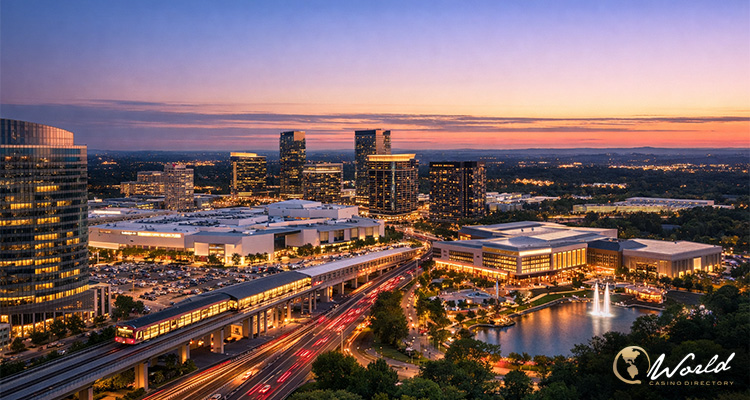
Fairfax County, Virginia, is once again considering a proposal to build a large casino and entertainment complex in Tysons, a move that has reignited local opposition. Senate Bill 756, introduced by Senate Majority Leader Scott Surovell, would place Fairfax County on the list of eligible localities to host a casino, an effort Surovell believes is vital for the county’s financial future. However, residents and local leaders, particularly those in Tysons, are strongly opposed to the idea.
Proposed Casino Bill in Fairfax County Sparks Strong Opposition
The bill, which mirrors a similar proposal introduced in 2025, would allow a casino to be built within Tysons, specifically near the Spring Hill Metro station. This location, under the bill’s criteria, would be part of a large-scale, mixed-use development plan encompassing over 1.5 million square feet of commercial space. The project would also feature a hotel, performing arts center, convention center, and retail outlets, in addition to the casino itself.
Despite these grand plans, Tysons residents are voicing their concerns. Paula Martino, president of the Tysons Stakeholders Alliance, expressed disappointment at the bill’s reintroduction. In her statement, she emphasized that the casino proposal was incompatible with the community’s vision. “A casino would bring increased traffic, strain local infrastructure, and undermine years of careful planning aimed at building a livable, mixed-use community,” she argued, as stated in a press release published by Tysons Stakeholder Alliance.
Martino’s concerns are shared by many in Fairfax County, where polling has shown overwhelming opposition to the casino project. A survey revealed that 75% of Fairfax County residents oppose a casino in Tysons, and the Fairfax County Board of Supervisors has also voiced their opposition to the development. In December, the Board formally included a statement of opposition in its 2026 Legislative Package, aligning with the views of many community members.
The Push for Economic Development vs. Local Resistance
Surovell’s push for a casino in Tysons stems from his belief that Fairfax County’s economic model is in need of a boost. The county, he argues, is losing millions of dollars in tax revenue to the MGM casino across the border in Maryland. He maintains that bringing a casino to Tysons would provide a significant source of revenue, potentially generating over $300 million annually. This income could help lower real estate taxes for residents and fund public services such as education and emergency services.
The casino’s proponents, including Surovell and the Virginia Player’s Alliance, view it as a critical component of a larger development plan designed to revitalize the area. The development would not only include the casino but also provide essential infrastructure improvements, such as a convention center and a hotel, helping the area become a major economic hub. Surovell claims that the proposal would create significant local jobs and provide long-term economic benefits for the county.
However, local leaders, particularly those from Tysons, argue that the casino is an ill-suited development for the area. Supervisor Walter Alcorn of the Hunter Mill District, who led the charge for the Board of Supervisors’ opposition, has repeatedly stated that Tysons should not be turned into a casino-centric destination. He pointed out that the casino would contradict the county’s long-standing efforts to develop Tysons as a high-density, mixed-use area that prioritizes residential living and sustainable growth.
A Casino in Tysons? Voters Will Decide
The ongoing debate has resulted in a complicated legislative process. While Surovell remains hopeful, he acknowledges that previous versions of his casino proposal have failed to gain approval, even as the bill has advanced further each year. This time, the bill would require a referendum, giving Fairfax County voters the final say on whether a casino should be built in Tysons. Should the proposal be approved by the General Assembly and signed into law by Governor Abigail Spanberger, the Board of Supervisors would still need to schedule the referendum, and only if it passes would the competitive application process for operators begin.
Despite the challenges facing the proposal, Surovell remains undeterred. He argues that Fairfax County needs to consider new sources of revenue, especially given the county’s current fiscal strain. “The board of supervisors have been asking for decades for more ways to raise money,” Surovell said. He pointed out that the county’s commercial tax base is continuing to decline, and a casino could provide a much-needed economic uplift.
