

 United States
 Macau, China
 France
 Philippines
 Singapore
 Netherlands
 United Kingdom
 Canada
 Argentina
 Germany
 Estonia
 Peru
Peru Russia
 Australia
 South Africa
 Nigeria
 Malaysia
 Singapore
 India
India Finland
 China
China Ukraine
 Hong Kong
 Cyprus
 Turkey
 Greece
 Sweden
 South Korea
 Mexico
 Poland
 Ireland lottery results
 New Zealand lottery results
 Puerto Rico lottery results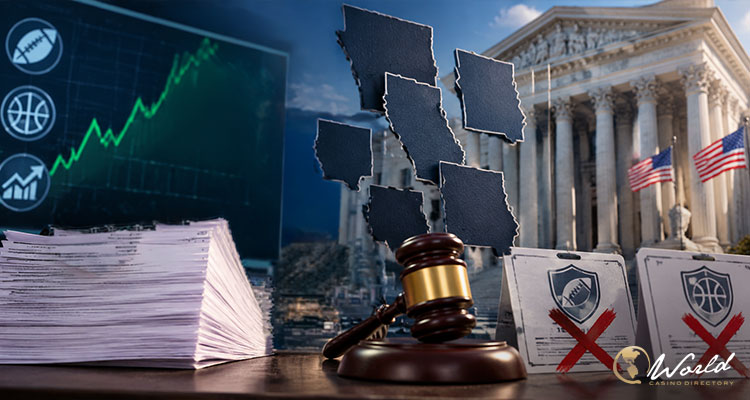
Underdog has filed lawsuits against five US states as the company seeks to prevent potential enforcement actions against its sports prediction markets business. The fantasy sports and prediction market operator filed cases against Massachusetts, New Mexico, Ohio, Washington and Wisconsin on September 8.
The company is asking federal courts to issue permanent injunctions preventing those states from applying gambling laws to Underdog’s prediction market operations. It is also requesting declarations that such enforcement would be unlawful.
The legal move follows Underdog’s decision to surrender daily fantasy sports licenses in seven states as it focuses more heavily on prediction markets. The company stopped offering its Drafts fantasy product in Maryland, Massachusetts, Michigan, Mississippi, New Jersey, Ohio and Pennsylvania.
Underdog argues that its prediction markets fall under federal oversight through the Commodity Futures Trading Commission (CFTC). The company maintains that the Commodity Exchange Act (CEA) gives the CFTC exclusive authority over event contracts, overriding state gambling regulations.
Stacie Stern, Underdog senior vice president of government affairs and partnerships, said:
“We’re licensed by the federal government to offer markets, and we take our responsibilities as a federal exchange seriously and strictly comply with all regulations. Do we believe we are right on the law? Yes. Do we accept that these state gaming boards believe they are right on the law? Yes.
“We’ve worked with them, we respect them, and we didn’t want to sue, but sometimes it’s the only way to resolve a dispute. With cases and divergent rulings across the country, everyone can see what’s happening in our industry: it’s a mess. We need the Supreme Court to decide whether we’ll have one, enforceable federal standard or state-by-state regulation.”
Company Cites Previous State Actions Against Prediction Platforms
Underdog’s court filings refer to enforcement efforts against other prediction market operators as evidence that similar action could be taken against the company.
The Massachusetts filing points to the state attorney general’s case against Kalshi, where authorities obtained a preliminary injunction preventing the company from offering sports-related event contracts. The injunction was later paused while Kalshi continues its appeal.
In Ohio, Underdog highlighted actions taken by the Ohio Casino Control Commission (OCCC), which ordered several CFTC-registered companies to stop offering sports contracts and began administrative proceedings that could result in a $5 million fine against Kalshi.
The Wisconsin lawsuit referenced enforcement proceedings involving Kalshi, Coinbase, Robinhood, Polymarket and Crypto.com’s OG exchange.
The company wrote in its filings: “Underdog now faces the imminent threat that Defendants will enforce [named state’s] gambling and sports wagering statutes against its federally regulated market.”
The legal dispute comes amid broader disagreements between states and prediction market operators over whether sports event contracts should fall under state gambling rules or federal derivatives regulation.
Underdog Moves Further Into Prediction Markets
Underdog began offering prediction markets in September 2025 through a partnership with Crypto.com. Since then, the company has continued shifting its business strategy toward the sector.
In March, Underdog acquired Aristotle Exchange, a CFTC-registered designated contract market (DCM), and later registered with the National Futures Association as a futures commission merchant (FCM). The company’s DCM and FCM status allows it to operate its own exchange and accept customer orders for event contracts traded on other exchanges.
Underdog also agreed in July to be acquired by UK-based fintech company IG Group in a deal valued at approximately $1.1 billion. An IG Group investor presentation forecast that prediction markets would represent 14% of Underdog’s total handle in 2025, increasing to 46% in 2026 and eventually reaching 99%.
The company’s move away from fantasy sports followed regulatory disagreements. Founder and CEO Jeremy Levine said several states required Underdog to choose between maintaining fantasy sports licenses and continuing to offer its CFTC-approved prediction market products.
“Those states have taken a legal viewpoint we disagree with: if we offer our CFTC-licensed products we cannot offer fantasy sports in those states,” Levine wrote. “So we had to choose. We could keep our fantasy licenses in those states, or surrender the licenses and offer effectively our full experience, minus Drafts.”
Underdog said Drafts contests already entered in the affected states would continue normally, while new contests would no longer be accepted.
The company will continue offering fantasy contests in around 35 US jurisdictions after the shutdown. Its prediction market products are available in 46 states, excluding Arizona, Michigan, Nevada and New York.
Other companies have also entered the legal debate. Novig, a former betting exchange and sweepstakes gaming platform that now operates sports-focused prediction markets, filed lawsuits against five states in August.
Stern said Underdog intends to continue discussions with regulators while seeking legal clarity.
“For Underdog, the product speaks for itself. We’ve proven we can build the best fan experience and delivered it responsibly under every legal regime imaginable. A consistent, national framework is what’s best for customers, but we’ll keep growing either way,” Stern said, as SBC Americas reports.
“To the states we’re litigating with: we want to keep working together and keep the lines of dialogue open. And regardless of outcome, we will always take care of our customers. We look forward to the Supreme Court resolving this. And whatever the result, we’ll keep offering sports fans the best products in the industry and in a responsible way.”
