

 United States
 Macau, China
 France
 Philippines
 Singapore
 Netherlands
 United Kingdom
 Canada
 Argentina
 Germany
 Estonia
 Peru
Peru Russia
 Australia
 South Africa
 Nigeria
 Malaysia
 Singapore
 India
India Finland
 China
China Ukraine
 Hong Kong
 Cyprus
 Turkey
 Greece
 Sweden
 South Korea
 Mexico
 Poland
 Ireland lottery results
 New Zealand lottery results
 Puerto Rico lottery results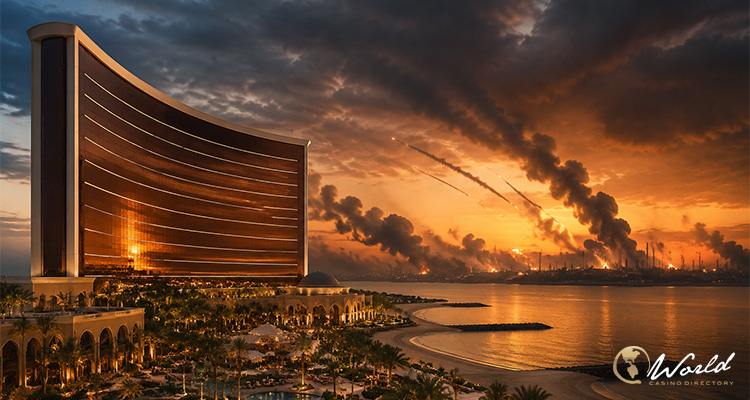
Wynn Resorts is evaluating whether to push back the launch of its large-scale casino resort in the United Arab Emirates, according to sources cited by Bloomberg, as regional instability linked to the conflict involving Iran continues to affect construction and tourism activity. The project, valued at $5.1 billion, had been expected to open in early 2027, though earlier timelines also pointed to a spring debut next year.
The Las Vegas-based operator has not publicly confirmed any delay but acknowledged it is closely watching developments in the region. Construction work on the site, located on Al Marjan Island in Ras Al Khaimah, faced temporary interruptions after hostilities intensified, although activity resumed in March. Ongoing concerns, including drone and missile activity, have continued to disrupt progress and reduce visitor numbers.
Regional Tensions Disrupt Construction Plans
The possibility of postponement follows increasing security challenges tied to Iranian military actions. Reports indicate that infrastructure across the UAE, including commercial and transport hubs, has been targeted, creating complications for large development projects.
Recent incidents have included strikes damaging luxury resorts in Dubai, roughly an hour from Wynn’s development site. At the same time, the UAE’s defense authorities have reported intercepting drone and missile attacks, underscoring the ongoing risks in the region.
Wynn stated earlier that it remains in communication with both US and UAE officials as it monitors the situation. “The Company continues to be in regular communication with the governments of the United States and Ras Al Khaimah, UAE, so that we can make informed decisions,” the company said. “The Company believes the broad defense posture of the UAE has worked extremely well, and we have confidence in the UAE’s ability to keep its population safe.”
The resort, once completed, will be the first casino property of its kind in the Middle East. Plans for the complex include 22 restaurants, an events venue, private prayer facilities, and a large ballroom overlooking the marina.
Tourism Slowdown Adds Pressure
In addition to construction challenges, the regional tourism sector has experienced a significant downturn since the conflict escalated. Industry figures suggest visitor activity has fallen sharply, affecting occupancy rates and broader economic expectations for hospitality projects.
MGM Resorts International, which is also developing a hospitality project in Dubai, has acknowledged similar trends but maintains its timeline. CEO Bill Hornbuckle commented on the situation during a recent earnings call, saying: “The tourism business in that particular neck of the world is down to like 15%, give or take.” He added, “I’d say different occupancies are down to that level. So it will take some recovery time no matter what happens here over the next couple of months. But long-term, we remain very excited.”
Despite these short-term pressures, major operators continue to view the UAE as a promising location for future growth in gaming and hospitality.
Strategic Importance of the UAE Market
The UAE has drawn attention from casino operators due to its potential as a new market for gaming. Analysts estimate that, if additional venues are introduced, the country could generate between $3 billion and $5 billion in gross gaming revenue annually. Such figures would place it among the leading global markets in the sector.
Wynn’s Al Marjan Island resort is expected to play a central role in shaping that market. The development forms part of a broader push by the UAE to expand its entertainment and tourism offerings, including large-scale resorts and attractions.
Financial markets have reacted to the geopolitical situation as well. Wynn’s share price declined in the early stages of the conflict but has since recovered, showing gains over the past month.
