

 United States
 Macau, China
 France
 Philippines
 Singapore
 Netherlands
 United Kingdom
 Canada
 Argentina
 Germany
 Estonia
 Peru
Peru Russia
 Australia
 South Africa
 Nigeria
 Malaysia
 Singapore
 India
India Finland
 China
China Ukraine
 Hong Kong
 Cyprus
 Turkey
 Greece
 Sweden
 South Korea
 Mexico
 Poland
 Ireland lottery results
 New Zealand lottery results
 Puerto Rico lottery results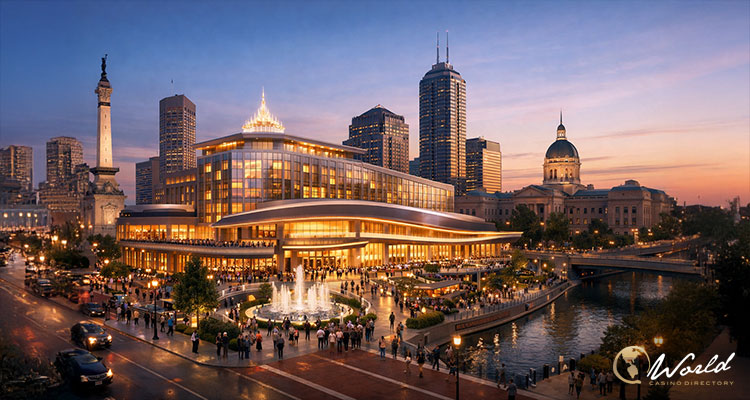
Indiana lawmakers are advancing a proposal that could place the state’s first casino in downtown Indianapolis, setting off a renewed debate at the Statehouse over economic gains, regional fairness, and social impact. The legislation, led by Republican State Senator Aaron Freeman, aims to open discussions during the upcoming legislative session about allowing casino gaming in the state’s capital city.
Freeman said he plans to file the bill this week, emphasizing that the proposal does not dictate a final location or design. Instead, he described it as a starting point for lawmakers to weigh options and hear input from both chambers. “I just want it to be a discussion and to be able to work with the House and what they think where this casino should go,” Freeman said. “I just want Indianapolis to be to have its opportunity to be in the mix.”
Bipartisan Support and Revenue Expectations
The effort has drawn backing from both political parties, including Democratic State Senator Greg Taylor of District 33. Taylor said the cross-party cooperation reflects a shared focus on statewide benefits rather than partisan goals. “The bipartisan effort shows that we’re putting politics aside on this issue,” Taylor said according to WRTV Indianapolis. “We’re talking about a benefit to the entire state of Indiana.”
Supporters point to projections from early studies commissioned by the Indiana Gaming Commission. Those studies estimate that a casino located in Indianapolis could generate approximately $170 million per year in gaming tax revenue for the state. That figure exceeds estimates for a potential casino in northwest Indiana by more than double.
Taylor argued that Indianapolis’ existing role as a center for conventions, sports, and entertainment strengthens the financial case. “Not only does Indianapolis have a unique position from a convention standpoint, but we also are the economic engine for the state of Indiana,” he said.
Freeman framed the proposal as a test of the state’s approach to gaming policy. “If the goal of our gaming system in Indiana is not revenue, then somebody’s going to have to explain to me what gaming is in Indiana,” Freeman said. “If it’s revenue, Indianapolis obviously would generate the most money.”
City, Tourism Leaders, and Site Discussions
Visit Indy has publicly supported the concept, saying a downtown casino could complement the city’s convention and tourism base if planned carefully. In a statement, the organization said: “Visit Indy supports the State of Indiana and City of Indianapolis working together to bring a casino to downtown Indianapolis. Our expectation is that the project’s quality of experience and specific location will align with the best interests of our major convention and event customers and stakeholders.”
City officials confirmed that conversations about a potential downtown casino began after the close of the 2025 legislative session. A spokesperson said studies show the city’s sports, events, and entertainment economy is well positioned for such an investment and that local leaders will continue to involve community stakeholders if lawmakers advance the proposal.
Economic analysis conducted by Spectrum Gaming Group for the Indiana Gaming Commission estimated broader impacts, projecting roughly $490 million in annual gaming revenue alongside the $170 million in tax receipts. The study also noted that some revenue could shift away from existing casinos in places such as Anderson and Shelbyville.
Potential locations mentioned in discussions include surface parking areas near Lucas Oil Stadium and sections of Pan Am Plaza, tying the proposal closely to existing event infrastructure.
Public Concerns and Social Impact
Despite the financial arguments, the idea faces resistance from some residents and advocacy groups. Fred Andrews, a lifelong Indianapolis resident, said he does not support expanding gambling access. “I wouldn’t put dollars in the casino. I work too hard for my dollars,” Andrews said. “We have enough gambling as it is. With the lotteries and all that. You know what? I’m a poor man. I don’t have dollars to give.”
Problem gambling advocates have also urged caution. Christina Gray, head of the Indiana Council of Problem Gambling, said the state must strengthen support systems before increasing access. “Problem gambling is considered a disease, and so we need to address it that way,” Gray said. “We need to view it that way as a disease, and these people are going to be struggling with this disease the rest of their life, and they need to learn how to resist the urge to continue to gamble. And so through treatment and possibly GA meetings or just getting help.”
As lawmakers prepare for debate, supporters stress that any plan should ensure benefits extend beyond Indianapolis. “We need to make sure that they have a piece of the pie, too,” Taylor said. “This could be a collaborative effort, in my opinion, that benefits the state of Indiana as a whole.”
The proposal now moves toward legislative consideration, where questions about location, regional balance, and social safeguards are expected to shape its future.
