

 United States
 Macau, China
 France
 Philippines
 Singapore
 Netherlands
 United Kingdom
 Canada
 Argentina
 Germany
 Estonia
 Peru
Peru Russia
 Australia
 South Africa
 Nigeria
 Malaysia
 Singapore
 India
India Finland
 China
China Ukraine
 Hong Kong
 Cyprus
 Turkey
 Greece
 Sweden
 South Korea
 Mexico
 Poland
 Ireland lottery results
 New Zealand lottery results
 Puerto Rico lottery results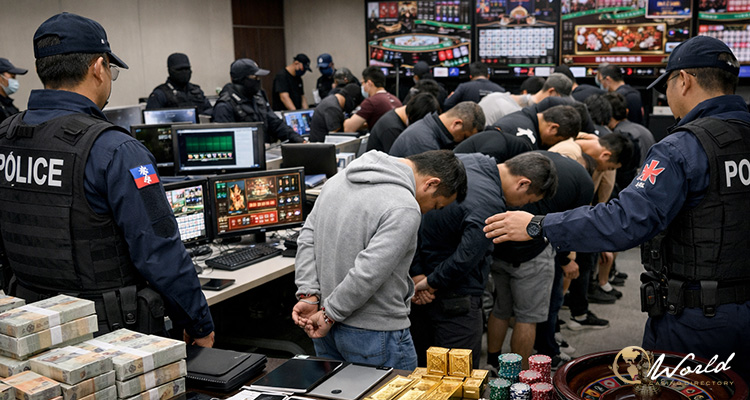
Earlier this month, prosecutors in Taiwan brought charges against 35 individuals accused of running a large-scale illegal online gambling and money laundering operation that authorities say handled more than NT$30.6 billion in illicit funds. The case centers on a network that relied on custom-built payment platforms to move gambling proceeds linked to unlicensed websites operating across several countries in Asia.
According to the Taipei District Prosecutors Office, the alleged scheme operated for years by routing gambling-related transactions through intermediary services designed to hide the origin and destination of funds. Investigators estimate the operation processed the equivalent of about US$975 million over several years.
Payment platforms used to mask gambling transactions
Prosecutors identified a 41-year-old man surnamed Lo as the central figure in the case. Lo, who ran a Hong Kong-style diner in Taipei, allegedly began building the operation in August 2020 after purchasing the source code for a payment platform system. That technology later formed the basis of two services known as HeroPay and MatchPay.
Lo now faces charges that include money laundering, organized crime, and illegal online gambling. Prosecutors are seeking a combined prison sentence of nine years and six months. They have also requested the confiscation of proceeds believed to have been generated through the operation.
Investigators in Taiwan say the network created and controlled the two payment services, which functioned as go-betweens for unlawful online betting activity. By processing wagers through systems they owned, the group allegedly concealed both the origin and final destination of the funds, avoided standard monitoring safeguards, and grew the operation to a volume approaching US$1 billion. When the group later introduced its own gambling website, authorities say it no longer needed outside banking partners, since the payment infrastructure was already in place.
Prosecutors describe the platforms as central to the laundering scheme, noting that player payments were redirected through these services rather than sent straight to gambling operators, a setup that complicated efforts by banks and regulators to trace the financial flows. The gambling websites linked to the case were based in multiple countries, including China, Japan, and India. By acting as intermediaries, the payment platforms allegedly helped those sites collect funds without direct exposure to financial oversight.
Legitimate Payment Options
It’s important to remember that every legitimate licensed online casino that accepts real-money play typically gives customers multiple ways to move funds in and out of their accounts, with the goal of keeping transactions fast, safe, and straightforward. In some cases, casinos sweeten the process by attaching extra value to deposits, either through bonuses or small credits tied to payment options that reduce processing costs for the operator, much like those found at casinobonusca.com. As casino gaming has shifted increasingly toward mobile devices, digital wallets and mobile-first services have gained prominence, with options like Apple Pay joined by PayPal, cryptocurrency-based payments, Google Pay, Skrill, Venmo, and similar tools becoming common choices for players.
Expansion into in-house gambling operations
Investigators say the group’s activities expanded further in June 2022, when it launched its own online gambling website called Rich 11. The platform reportedly offered baccarat, slot-style games, and sports betting. HeroPay allegedly served as the primary method for collecting player deposits on the site.
Authorities estimate that between July 2021 and Sept. 9, 2025, funds tied to both Rich 11 and payment services provided to other illegal gambling platforms totaled NT$30.695 billion. Prosecutors allege the money supported several purposes, including personal profits for Lo, operating expenses for the payment platforms, and investments in other businesses.
One such business was another restaurant in Taipei, Dongyin Quick Knifeman. Prosecutors say it functioned in a similar way to Lo’s original diner, which authorities believe was used as a front for parts of the gambling operation.
Charges reflect broader enforcement efforts
Among the 35 people indicted is a woman surnamed Huang, whom prosecutors describe as responsible for financial and administrative work. Authorities say she helped rent office space under the restaurant’s name, which became the base of operations. Prosecutors are seeking a sentence of more than six years for Huang.
All defendants were indicted under Taiwan’s Organized Crime Prevention Act, the Money Laundering Control Act, and Criminal Code provisions related to online gambling.
The case comes as Taiwan steps up enforcement against illegal betting activity. Legal sports wagering in Taiwan remains tightly controlled, which authorities say has contributed to the growth of underground platforms. In recent years, officials have pursued high-profile cases involving athletes and gambling-related offenses.
In June 2025, lawmakers passed amendments that significantly increased penalties for manipulating sports betting outcomes, allowing for sentences ranging from seven years to life in prison. While those changes address match-fixing rather than payment processing, prosecutors say the broader legal framework reflects growing concern over the scale and sophistication of illegal gambling operations.
The current case highlights how financial technology can be repurposed to support illicit activity, prompting authorities to focus not only on gambling sites themselves but also on the systems that move money behind the scenes.
