

 United States
 Macau, China
 France
 Philippines
 Singapore
 Netherlands
 United Kingdom
 Canada
 Argentina
 Germany
 Estonia
 Peru
Peru Russia
 Australia
 South Africa
 Nigeria
 Malaysia
 Singapore
 India
India Finland
 China
China Ukraine
 Hong Kong
 Cyprus
 Turkey
 Greece
 Sweden
 South Korea
 Mexico
 Poland
 Ireland lottery results
 New Zealand lottery results
 Puerto Rico lottery results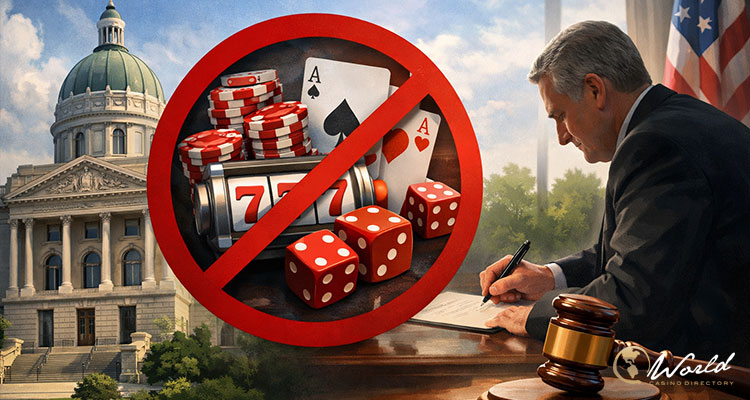
Indiana has enacted new legislation targeting online sweepstakes-style casino platforms, setting a July 1 start date for a statewide ban on games that use dual-currency systems to replicate gambling products. The measure, House Bill 1052, received final approval after Gov. Mike Braun signed the legislation into law.
Dual-Currency Gaming Models Targeted by New Law
The bill forms part of a broader administrative law package covering multiple sectors, though the provision affecting sweepstakes-style gaming has drawn the most attention within the gambling industry. Once the law takes effect, certain internet-based gaming products that simulate casino or lottery-style gambling will become illegal for operators serving Indiana residents.
The measure places Indiana among a growing list of states that have taken action against sweepstakes casinos in recent years. Similar bans have already been implemented in states such as Connecticut and Montana, while additional legislation targeting the same type of gaming model is progressing elsewhere.
House Bill 1052 focuses on games that allow players to participate in casino-style activities using more than one form of currency. The statute defines the targeted activity as internet-based games, contests, or promotional systems that simulate gambling products and allow players to exchange virtual currency for cash prizes, cash equivalents, or opportunities to win them.
The law specifically references gaming formats that resemble slot machines, table games, video poker, bingo, lottery-style products, and sports wagering. The legislation also addresses platforms accessible through mobile phones, computers, or other digital devices.
The final version of the bill expanded earlier language that referred only to dual-currency systems. The enacted statute now includes both dual-currency and multi-currency payment models, broadening the scope of the prohibition.
Some categories of games remain outside the definition used in the legislation. Promotions conducted by the Indiana State Lottery are excluded, and peer-to-peer poker contests categorized as skill-based competitions also fall outside the ban.
Enforcement Authority for Indiana Gaming Commission
Once the law comes into effect, the Indiana Gaming Commission will gain new authority to enforce the ban. Regulators will be able to impose civil penalties of up to $100,000 against operators or individuals who knowingly offer sweepstakes-style casino products to people located in Indiana.
Earlier versions of the bill included criminal penalties. However, those provisions were removed through amendments during the legislative process and replaced with civil enforcement measures.
The final statute integrates the new sweepstakes provisions into the state’s existing gambling enforcement framework. Lawmakers made additional revisions to clarify definitions and ensure consistency with current gaming regulations administered by the Indiana Gaming Commission.
Regulators had previously indicated that the lack of explicit language in state law limited their ability to take action against sweepstakes platforms. Because these products had not been clearly defined as illegal, the commission said it could not confidently issue enforcement actions such as cease-and-desist orders.
The new legislation addresses that gap by formally defining sweepstakes casino activity and establishing penalties for operators that continue offering such products in the state.
Legislative Support and Opposition
House Bill 1052 moved through the Indiana legislature with strong support from lawmakers. The Indiana House approved the measure by a vote of 87-11 on February 2. The Senate later passed the bill with a 37-8 vote before sending it to the governor for final approval.
During the legislative process, some lawmakers discussed whether regulation and taxation could serve as an alternative to prohibition. The Social Gaming Leadership Alliance argued that regulating sweepstakes-style gaming could provide consumer protections and generate tax revenue.
The organization proposed a regulatory structure that would include measures such as age verification requirements, responsible gameplay standards, and data privacy protections.
Despite those arguments, the proposal to regulate the sector did not gain enough support in the legislature.
Following the bill’s passage, Social Gaming Leadership Alliance Managing Director Sean Ostrow expressed disappointment with the outcome but emphasized continued interest in working with lawmakers.
“We are disappointed that HB 1052 has become law, but are grateful to the many Indiana lawmakers who engaged thoughtfully on the merits of regulating this long-standing industry,” Ostrow said in a statement reported by SBC Americas.
“Despite the outcome, the legislative record shows meaningful bipartisan support for a smarter approach that embraces innovation and economic growth. We look forward to continuing to work with Indiana lawmakers on a regulatory framework for digital entertainment that protects the hundreds of thousands of Hoosiers that enjoy Social Plus games, while generating tens of millions in annual tax revenue.”
The new law places Indiana among several jurisdictions addressing sweepstakes-style gaming models. Legislators in other states have also introduced measures targeting similar online platforms.
In Tennessee, lawmakers recently advanced Senate Bill 2136, which treats sweepstakes gaming as a consumer protection issue. The proposal categorizes certain online sweepstakes activities as unfair or deceptive practices under the Tennessee Consumer Protection Act.
Oklahoma lawmakers have taken a different approach through Senate Bill 1589. That proposal expands existing gambling statutes to include online casino-style sweepstakes games and introduces potential criminal penalties for companies providing services to sweepstakes operators.
