

 United States
 Macau, China
 France
 Philippines
 Singapore
 Netherlands
 United Kingdom
 Canada
 Argentina
 Germany
 Estonia
 Peru
Peru Russia
 Australia
 South Africa
 Nigeria
 Malaysia
 Singapore
 India
India Finland
 China
China Ukraine
 Hong Kong
 Cyprus
 Turkey
 Greece
 Sweden
 South Korea
 Mexico
 Poland
 Ireland lottery results
 New Zealand lottery results
 Puerto Rico lottery results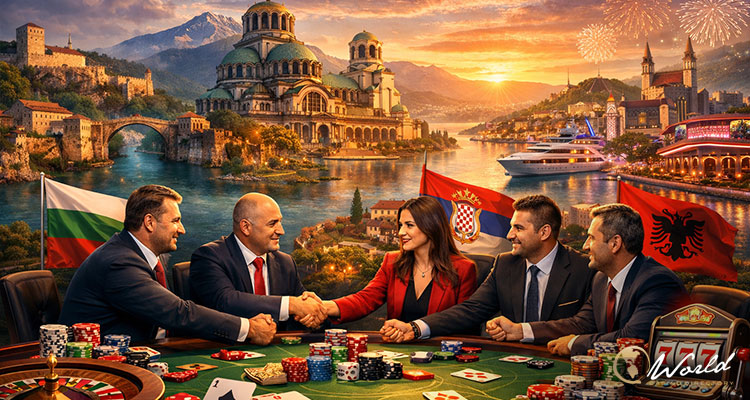
Seven gambling industry associations from across Southeast Europe have formalized a new regional body aimed at strengthening cooperation and representation on the international stage. The initiative brings together organizations from multiple Balkan countries under a single structure known as the Balkan Gaming Federation.
The agreement was signed in Belgrade following a joint initiative led by Serbia’s AGOS and Bulgaria’s AOGGAB. Representatives from Croatia, Romania, Montenegro, Bosnia and Herzegovina, and North Macedonia also joined the effort, marking the first coordinated platform of its kind for the region’s gaming sector.
The Federation gathers a wide range of stakeholders, including operators in both online and land-based segments, suppliers, manufacturers, and other companies active in the gambling ecosystem. Through this structure, the participating groups intend to coordinate their efforts more closely and present a unified position in discussions beyond the region.
Regional Coordination and Shared Priorities
The founding memorandum outlines several areas where the Federation will focus its activities. Among the key priorities are addressing illegal gambling, supporting fair competition, and exchanging regulatory knowledge between jurisdictions. The organizations also plan to coordinate on legislative developments and work together to attract investment into Balkan markets.
Industry representatives highlighted that the region faces similar pressures, including regulatory changes, increased competition from unlicensed operators, and the need for stronger alignment between national frameworks. By forming a joint body, the associations aim to improve communication and establish more consistent approaches to these shared challenges.
The Balkan region has increasingly drawn attention as a growing gaming market with expanding technological capabilities and a strong base of local and international operators. Its geographic position also contributes to its relevance, connecting multiple economic zones and supporting cross-border collaboration.
As part of its initial steps, the Federation has already begun developing internal communication channels and a coordinated approach to future initiatives. Plans also include organizing joint events and creating shared platforms for industry engagement across participating countries.
Positioning Within the European Framework
Several of the founding associations are already members of the European Gaming and Amusement Federation, which plays a broader role at the continental level. Within this context, the newly formed Balkan Gaming Federation is expected to function as a regional grouping while maintaining its own identity and priorities.
This structure allows the Federation to operate as a link between local industry coordination and wider European representation. Discussions during the founding meeting emphasized the importance of balancing regional autonomy with alignment to European standards and frameworks.
Further steps are already scheduled, including another meeting in Belgrade on May 26, 2026, during the Belgrade Future Gaming exhibition. At that gathering, members are expected to review and vote on a formal statute for the organization, while continuing work on its governance structure and long-term direction.
According to SBC News, the creation of the Federation comes at a time when multiple Balkan countries are revisiting their gambling laws and policies. These parallel developments have increased the need for coordination among industry stakeholders.
Serbia recently introduced changes allowing domestically licensed operators to offer jackpots, a move designed to encourage players to engage with regulated platforms. In Bulgaria, discussions continue around raising the legal gambling age, reflecting ongoing political pressure to tighten oversight.
Romania has initiated efforts to strengthen player protection through closer cooperation between regulators and policymakers. Montenegro has experienced disputes between the industry and government over proposed tax changes, while Croatia has begun implementing a reform package that includes a new self-exclusion system.
North Macedonia is considering further restrictions, supported by political leadership, and Bosnia and Herzegovina is evaluating potential changes to its tax framework, including discussions about removing VAT exemptions for the gambling sector.
These developments highlight the complexity of the regulatory landscape across the region. The establishment of a coordinated body is expected to help industry participants respond more effectively to evolving legal requirements and market conditions.
The Balkan Gaming Federation now moves into its next phase, focusing on formalizing its structure and expanding its role as a platform for cooperation and representation within both regional and European contexts.
