

 United States
 Macau, China
 France
 Philippines
 Singapore
 Netherlands
 United Kingdom
 Canada
 Argentina
 Germany
 Estonia
 Peru
Peru Russia
 Australia
 South Africa
 Nigeria
 Malaysia
 Singapore
 India
India Finland
 China
China Ukraine
 Hong Kong
 Cyprus
 Turkey
 Greece
 Sweden
 South Korea
 Mexico
 Poland
 Ireland lottery results
 New Zealand lottery results
 Puerto Rico lottery results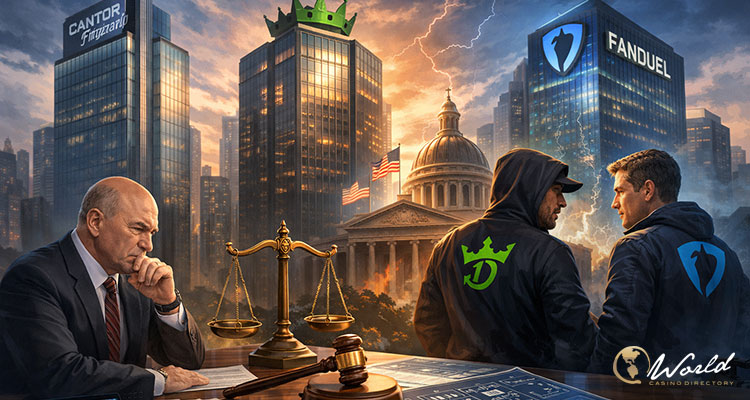
A legal dispute involving major sports-betting platforms has emerged as an affiliate of Cantor Fitzgerald filed patent infringement lawsuits against DraftKings and FanDuel in federal courts. The complaints, lodged in New Jersey and Massachusetts, accuse the companies of using protected mobile-gambling technology developed by Cantor Gaming, a now-defunct subsidiary linked to the financial firm.
Interactive Games LLC, the plaintiff and a Cantor affiliate, claims ownership of five patents tied to mobile wagering systems. The company alleges that these patents underpin key features used across sportsbooks, casino products, and fantasy sports applications operated by the defendants. The lawsuits seek unspecified financial damages and request jury trials.
Claims Focus on Core Mobile Betting Technology
According to the filings, the disputed patents cover systems designed to verify user identity and location, as well as tools that detect tampering on mobile devices. These technologies play a central role in enabling legal online betting, ensuring compliance with regulatory requirements and maintaining platform integrity.
Two of the patents were co-invented by U.S. Commerce Secretary Howard Lutnick during his time leading Cantor Fitzgerald. Lutnick founded Cantor Gaming in 2006, and the patents were developed alongside other company employees. Although he is listed as an inventor, the patents are now held by Interactive Games.
The lawsuits extend beyond just DraftKings and FanDuel. In the New Jersey case, British betting company Betfair is also named as a defendant. Representatives for Cantor Fitzgerald, FanDuel, and the U.S. Patent and Trademark Office declined to comment, while DraftKings did not immediately respond to inquiries.
Ethical Questions Surround Government Oversight
The case introduces a complex dynamic involving Lutnick’s current role as head of the U.S. Department of Commerce, which oversees the U.S. Patent and Trademark Office (USPTO). Companies accused of patent infringement often challenge the validity of patents by petitioning the USPTO for review.
This process could place DraftKings and FanDuel in an unusual position, as they may need to seek review from an agency led by the same official who co-invented the patents at issue. A Commerce Department spokesperson cited by Reuters stated, “Secretary Lutnick has fully complied with the terms of his ethics agreement, including all divestiture and recusal requirements, and will continue to do so.”
Lutnick stepped down from his roles at Cantor Fitzgerald and Interactive Games after his confirmation as Commerce Secretary. The company also stated that he divested his business interests as part of his transition into government service.
Legal experts note that inventors are not always owners of the patents they help create, as intellectual property is often assigned to employers or affiliated entities. Still, Lutnick’s involvement has drawn attention due to his extensive history in the patent system. Dennis Crouch, a law professor at the University of Missouri, observed, “Lutnick is the first Secretary of Commerce in U.S. history who is so personally and financially tied into the patent system.”
Longstanding Disputes and Potential Next Steps
The newly filed cases add to a history of litigation between Cantor-related entities and major betting platforms. Interactive Games previously pursued similar claims against DraftKings and FanDuel beginning in 2016. In those earlier disputes, the defendants challenged the validity of the patents through administrative reviews at the USPTO, leading to mixed outcomes.
Industry observers expect a similar strategy in the current cases. DraftKings and FanDuel are likely to contest the patents’ validity and may seek to pause court proceedings while pursuing reviews before the Patent Trial and Appeal Board. They could also file motions arguing that the patents are not eligible for protection or are invalid due to prior art.
The broader implications extend beyond the companies directly involved. The case underscores ongoing tensions between innovation in mobile betting technology and the legal frameworks governing intellectual property. It also highlights the intersection of public office and private-sector influence, particularly when regulatory authority overlaps with past business interests.
Cantor Fitzgerald, founded in 1945, has long held a presence in financial services and has expanded into the gambling sector through Cantor Gaming. The outcome of this dispute may shape how similar technologies are licensed and enforced across the rapidly growing U.S. mobile betting market.
As the cases move forward, parallel proceedings in federal courts and patent review bodies are expected. Whether the dispute leads to settlements, licensing agreements, or extended litigation remains uncertain, but the legal battle is likely to have lasting effects on both the betting industry and patent enforcement practices.
