

 United States
 Macau, China
 France
 Philippines
 Singapore
 Netherlands
 United Kingdom
 Canada
 Argentina
 Germany
 Estonia
 Peru
Peru Russia
 Australia
 South Africa
 Nigeria
 Malaysia
 Singapore
 India
India Finland
 China
China Ukraine
 Hong Kong
 Cyprus
 Turkey
 Greece
 Sweden
 South Korea
 Mexico
 Poland
 Ireland lottery results
 New Zealand lottery results
 Puerto Rico lottery results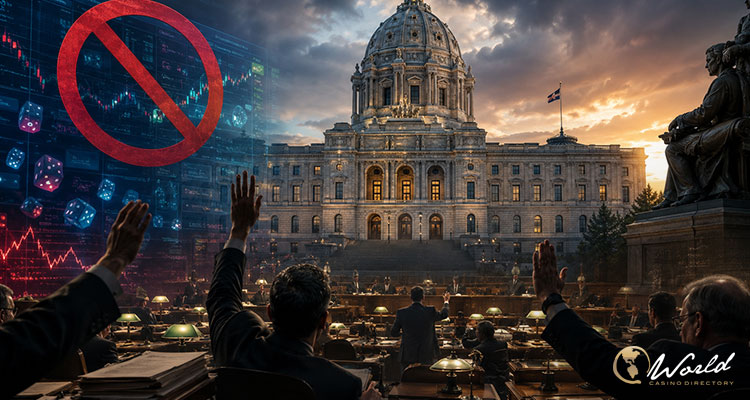
Minnesota lawmakers approved legislation Tuesday that would prohibit prediction market platforms such as Kalshi and Polymarket from operating in the state, advancing what could become the first explicit statewide ban of its kind in the country.
The proposal now heads to Gov. Tim Walz after passing both legislative chambers by large margins as part of a broader public safety package negotiated between House and Senate lawmakers before the end of the 2026 legislative session.
Under the measure, hosting or advertising prediction markets in Minnesota would become a felony offense. The legislation also allows felony charges against individuals involved in creating, facilitating, or managing the platforms.
Lawmakers included a wide range of event categories within the restrictions. The bill targets trades connected to athletic competitions, games of skill, wars, natural disasters, government decisions, criminal and civil proceedings, political outcomes, pop culture topics, and mass-casualty events.
Supporters of the legislation argued the platforms operate similarly to sportsbooks while avoiding state gambling oversight, taxes, and consumer protections.
“We as a state should decide how best and what regulations we think should attach to gambling, to protect public safety, to protect our kids,” said Rep. Emma Greenman, DFL-Minneapolis, according to MPR News. “We are joining dozens of other states, red states and blue states, who are trying to both protect the public and protect our markets from the shadowy financial gambling markets.”
Legislature Advances Ban Through Public Safety Bill
The prediction market language appeared in a sweeping public safety bill shortly before lawmakers prepared to conclude the session. Although a standalone version had already cleared the Senate with bipartisan backing, the House had not scheduled separate consideration of that proposal.
The combined public safety legislation passed the House by a 100-32 vote after the Senate approved it 57-9 earlier in the day.
Several Republican lawmakers criticized both the policy itself and the process used to move it forward. Rep. Drew Roach described the proposal as government overreach during debate before the final vote.
“I think it’s a great overstep,” Roach said. “It’s a sad day for Minnesotans and how we’re legislating.”
Rep. Nolan West, R-Blaine, also opposed the measure and warned lawmakers that banning prediction markets would likely shift activity outside regulated channels.
“Unfortunately, prohibition doesn’t work. If prohibition worked, we’d live in a utopia where we’d prohibit all bad things,” West said. “But when you prohibit things, you just move them into the shadows. That’s what will happen here.”
West argued that thousands of residents already participate in prediction markets and said the legislation could produce little public benefit while exposing the state to expensive legal disputes.
“We’re going to see no gain for the public,” West told Minnesota Public Radio. “We’re going to see massive losses in our litigation costs related to losing a case against the federal government.”
Ahead of the vote, West also questioned whether Minnesota had the authority to regulate prediction markets in the way outlined by the bill.
“This is a very bad idea, chiefly because we do not have the authority as a state to do so,” West said before voting against the proposal. “Every state that does so is starting to lose that litigation. This is going to cost the state who knows how much in legal fees for no actual gain.”
Federal Conflict Over Prediction Markets Continues
The legislation arrives during an expanding dispute between state governments and prediction market operators over who controls oversight of the platforms.
Companies such as Kalshi maintain that their markets fall under federal commodities law through regulation by the Commodity Futures Trading Commission (CFTC) under the Commodity Exchange Act. The CFTC has challenged several state efforts aimed at restricting prediction markets and has supported operators in multiple court battles.
Minnesota’s proposal differs from actions taken elsewhere because it attempts to create a direct statutory prohibition rather than relying only on cease-and-desist orders or regulatory enforcement.
If enacted, the law would take effect Aug. 1. Legal challenges are expected well before that date from either the federal government, prediction market companies, or both.
Prediction market operators and related companies are already involved in litigation across several states. Wisconsin sued Kalshi, Polymarket, Robinhood, Coinbase, and Crypto.com over sports-event contracts. Ohio regulators proposed a $5 million fine against Kalshi for allegedly operating unlicensed sports gaming. Courts in Nevada and Massachusetts have also reviewed disputes over whether federal commodities law overrides state gambling statutes.
In Arizona, a federal judge recently issued a temporary order blocking state officials from enforcing gambling laws against prediction-market companies while litigation continues.
Supporters of Minnesota’s legislation maintain that the state has the right to determine how gambling operates within its borders. Greenman pointed to Minnesota’s existing gaming framework, which includes tribal casinos, horse racing tracks, a state lottery, and charitable gaming operations. Minnesota remains one of 11 states without legalized sports betting.
“This (bill) is asserting Minnesotans’ authority to do what we’ve always done, which is to say how best and what regulations we think we should attach to gambling to protect public safety and our kids and the gambling itself,” Greenman said.
Critics within the prediction market industry also pushed back publicly after the legislation advanced. Kalshi spokesperson Elisabeth Diana posted on X: “Peak hypocrisy: MN banning prediction markets while its gov’t collects millions a year from slot machines, poker games, roulette tables, and casino games. Does anyone believe that casinos are safe and well-regulated, but CFTC-registered exchanges and clearinghouses are not?”
If Walz signs the bill or allows it to become law without his signature, Minnesota could become the first state to enact a legislative ban specifically targeting prediction markets.
