

 United States
 Macau, China
 France
 Philippines
 Singapore
 Netherlands
 United Kingdom
 Canada
 Argentina
 Germany
 Estonia
 Peru
Peru Russia
 Australia
 South Africa
 Nigeria
 Malaysia
 Singapore
 India
India Finland
 China
China Ukraine
 Hong Kong
 Cyprus
 Turkey
 Greece
 Sweden
 South Korea
 Mexico
 Poland
 Ireland lottery results
 New Zealand lottery results
 Puerto Rico lottery results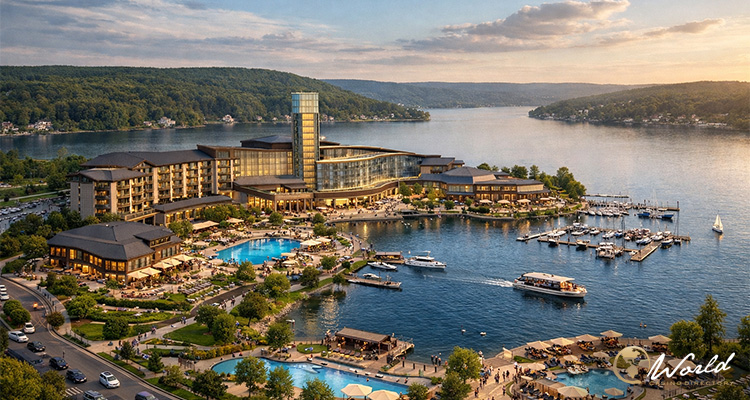
A proposed $500 million destination resort on Walters Lake is emerging as Steuben County’s entry in the competition for Indiana’s newest casino license, with local developer Mark Hansbarger presenting plans for a large-scale entertainment complex that would combine gaming, hospitality and outdoor attractions.
Hansbarger introduced the concept ahead of a Fremont Plan Commission meeting focused on a proposed overlay district for the 186-acre property located west of Fremont. The zoning discussion represents an early stage of the planning process and does not determine whether a casino project will ultimately be approved.
The proposed development would include a 400-room hotel, restaurants, walking trails, family-focused attractions and a casino. Hansbarger said the project is designed around a broader resort concept rather than a standalone gaming facility.
“That’s the difference, because this is a resort with a casino,” Hansbarger said.
The Walters Lake property includes more than 3,400 feet of shoreline and sits near major transportation routes, including Interstate 69 and the Indiana Toll Road. The site is approximately half a mile from the Michigan border, a location Hansbarger believes could help Steuben County attract visitors from outside Indiana.
Lakefront Location Drives Casino License Bid
Steuben County is competing with Allen and DeKalb counties for a single new inland casino license created through House Bill 1038. The legislation allows the three northeast Indiana counties to seek approval for a casino development, with voters required to approve gambling expansion through a November 2026 referendum before the county can proceed.
A feasibility study conducted for the Steuben County Economic Development Corporation projected that a casino resort could generate significant economic benefits, including hundreds of jobs and millions in annual tax revenue. The study estimated the project could create between 800 and 1,200 jobs, produce up to $72 million in annual payroll and deliver between $14 million and $16.6 million in local gaming tax revenue.
Hansbarger said Steuben County has an advantage because of its proximity to Michigan.
“Forty-eight percent of the revenue would come from Michigan,” Hansbarger said, citing the feasibility study. “That makes a difference. That’s what Allen County and DeKalb County do not have.”
Supporters of the proposal argue that the county’s existing tourism industry could support a year-round destination. Steuben County is home to more than 100 lakes and Pokagon State Park, which already attract visitors for outdoor recreation and seasonal activities.
The proposed resort would aim to extend tourism beyond the summer months by adding overnight accommodations and entertainment options that could bring visitors during quieter periods. Supporters say this could provide more consistent business for local companies and reduce reliance on seasonal tourism.
Development Plans Focus on Resort Experience
Hansbarger has emphasized that the project would separate itself from traditional roadside casinos. Under the proposal, the hotel and resort amenities would be positioned near the shoreline, while the casino would sit farther inland to preserve lake views and reduce impacts on nearby residential areas.
“It has to be good for the county, it has to be good for the people here, it has to be good for the lake, it has to be good for our entire area,” Hansbarger said, as WANE 15 reports.
The planned resort would be located on a property currently listed for $3.75 million under an assignable option agreement. Hansbarger said his role is focused on land development and assembling a project team rather than operating the casino itself.
He has already started discussions with potential casino and resort operators, although no operator has been announced.
The concept website promoting the project describes the development as a regional entertainment destination combining gaming, dining, live entertainment and lodging. The proposal highlights the goal of attracting visitors from Indiana, Michigan and Ohio while creating a new economic center for the region.
The project’s supporters also argue that keeping gaming activity within Indiana would allow more revenue to remain in the state instead of flowing to neighboring markets.
Zoning Review and Competition Continue
Before any casino proposal can advance, Steuben County must establish the appropriate zoning framework. The Fremont Plan Commission meeting examined an overlay district covering the Walters Lake property, including potential requirements related to traffic, lighting, environmental protections and design standards.
A temporary moratorium currently affects casino and gaming developments, as well as certain other large projects such as data centers and battery storage facilities. The commission chose to ensure regulations are properly established before considering further project approvals.
The proposal has also drawn opposition from some residents, with casino critics attending the meeting despite no public comment being scheduled.
Steuben County remains one of three counties seeking Indiana’s available casino license. Allen County has highlighted its population and commercial base, while DeKalb County has identified a possible development site near State Road 8.
If Steuben County voters approve casino gambling in the November 2026 referendum, developers would have until December 1, 2026, to submit a formal application to the Indiana Gaming Commission.
The final decision on the casino license will depend on the state review process, but Hansbarger’s Walters Lake proposal positions Steuben County as a candidate seeking to combine gaming revenue with a larger tourism-focused development.
