

 United States
 Macau, China
 France
 Philippines
 Singapore
 Netherlands
 United Kingdom
 Canada
 Argentina
 Germany
 Estonia
 Peru
Peru Russia
 Australia
 South Africa
 Nigeria
 Malaysia
 Singapore
 India
India Finland
 China
China Ukraine
 Hong Kong
 Cyprus
 Turkey
 Greece
 Sweden
 South Korea
 Mexico
 Poland
 Ireland lottery results
 New Zealand lottery results
 Puerto Rico lottery results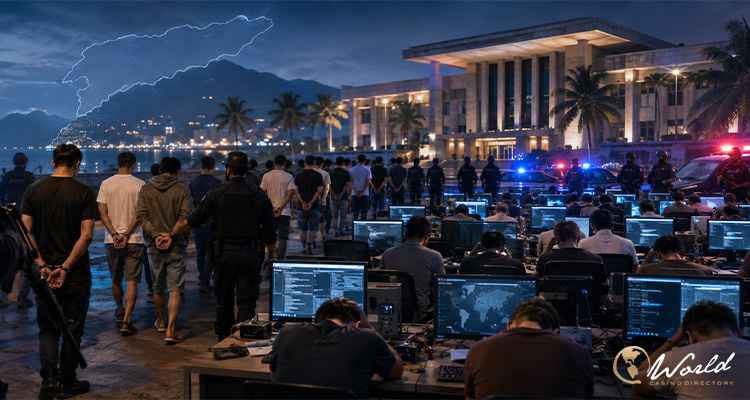
Timor-Leste authorities have intensified efforts against online crime, detaining 90 foreign nationals in operations targeting suspected illegal gambling and fraud activities. The arrests, conducted on Monday, July 13, in Dili and Liquiçá municipalities, follow a previous sweep last week that apprehended around 200 individuals involved in similar schemes.
Chief Superintendent João Belo of the National Police of Timor-Leste (PNTL) confirmed that the operations focused on locations associated with call centre-based fraud. “Today, we carried out two operations. One was in Dili, where we arrested 14 Chinese nationals caught in the act. The other took place in Liquiçá, where we arrested 75 Indonesian nationals and one Chinese national. In total, the two operations resulted in the arrest of 90 people,” Belo said. All detainees were transferred to the Criminal Investigation Headquarters in Kaikoli for identification and further investigation. Authorities are also examining seized cash, computer equipment, and other documents.
Enforcement Follows Rapid Policy Shift
The crackdown comes after a significant policy reversal by the Timor-Leste government regarding online gaming. In April 2025, the country had issued its first offshore gaming license to Golden River Universe (GRU), a subsidiary of Grand Dragon Lotaria, aiming to establish a regulated offshore gaming market. However, within months, the Council of Ministers rescinded all existing licenses, halted pending applications, and prohibited new permits due to security, social, and economic concerns. GRU stated it respected the government’s decision.
This change was prompted by a September 2025 warning from the United Nations Office on Drugs and Crime (UNODC), which highlighted the risk of organized criminal networks exploiting investment opportunities in Timor-Leste. The UNODC report specifically flagged the Oecusse-Ambeno Special Administrative Region and the Oecusse Digital Centre free trade zone, noting these areas were vulnerable to cyber fraud, money laundering, and human trafficking.
UNODC analysis indicated that regions hosting nascent digital criminal networks often evolve into hubs for multiple illicit activities, including online scams, drug trafficking, and human trafficking. Similar trends had been observed in Southeast Asian countries such as Cambodia, Laos, Myanmar, the Philippines, and Malaysia. The agency underscored that Timor-Leste’s full membership in ASEAN, effective October 2025, could enhance the risk of cross-border criminal activity.
Authorities have since ramped up enforcement measures to safeguard the nation’s digital and financial integrity. The latest operations mark a continued collaboration with community leaders and intelligence sources to detect and dismantle fraudulent schemes.
Looking Forward
The repeated detentions—bringing the total number of foreign nationals apprehended in recent raids to nearly 300—reflect the government’s ongoing commitment to curtail organized online criminal networks. By targeting both illegal gambling operators and associated fraud centers, Timor-Leste aims to protect national security, maintain social stability, and uphold the country’s international reputation.
As reported by LUSA, Belo emphasized the importance of continuing the investigative process: “We are carrying out the checks. Further details will be provided as investigations progress, ensuring that appropriate legal procedures are followed.” The authorities remain vigilant as they monitor emerging online threats in the country.
