

 United States
 Macau, China
 France
 Philippines
 Singapore
 Netherlands
 United Kingdom
 Canada
 Argentina
 Germany
 Estonia
 Peru
Peru Russia
 Australia
 South Africa
 Nigeria
 Malaysia
 Singapore
 India
India Finland
 China
China Ukraine
 Hong Kong
 Cyprus
 Turkey
 Greece
 Sweden
 South Korea
 Mexico
 Poland
 Ireland lottery results
 New Zealand lottery results
 Puerto Rico lottery results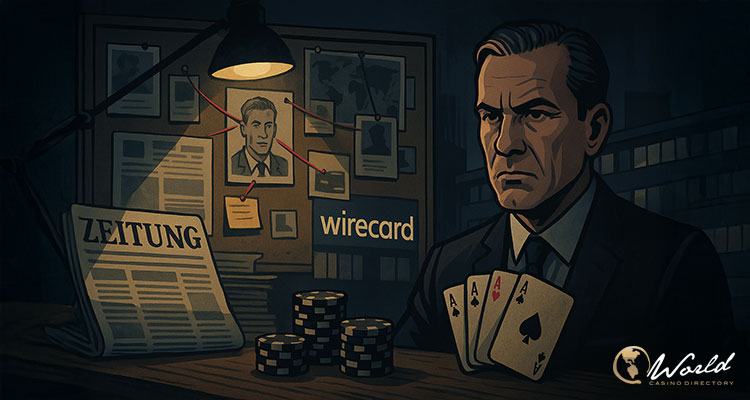
The collapse of German payments company Wirecard continues to generate new scrutiny, with investigative reporting from the German public broadcaster Bayerischer Rundfunk (BR) examining historical transaction flows through the firm’s so-called third-party partner accounts.
According to reporting by BR and Tagesschau, large volumes of funds that moved through these accounts were connected to networks of companies involved in online gambling and international payment processing. The reporting highlights Canadian-born entrepreneur Calvin Ayre, known for founding the Bodog brand and later investing in blockchain ventures, as one of several individuals whose business networks were referenced during the investigation.
Wirecard, once one of Germany’s largest fintech companies, collapsed in 2020 after auditors were unable to locate approximately €1.9 billion in supposed offshore trust accounts, triggering criminal proceedings against several former executives.
German media analysis of transaction records
BR’s investigation drew on court documents, internal emails, and transaction files linked to Wirecard’s “third-party acquiring” business — arrangements where external companies processed payments on behalf of merchants using Wirecard’s banking infrastructure.
According to BR’s analysis, the data suggested that substantial funds moved through accounts associated with several international companies. Some of those companies were reportedly located in jurisdictions including Prague, Podgorica, and Antigua.
The German broadcaster reported that its analysis of these records suggested that certain companies connected to Calvin Ayre’s business network appeared within the broader payment flow structure examined by investigators. The reporting also referenced transfers involving firms linked to addresses in Antigua.
BR reported that approximately €135 million moved from Wirecard Bank to a group of Antigua-based companies, while other transfers reportedly went to firms in Spain, Hong Kong, and the Philippines that were associated with gambling technology or consulting activities.
Background on Ayre’s gambling and technology ventures
Calvin Ayre first gained international attention through the online gambling brand Bodog, which grew rapidly during the early 2000s. Forbes featured him on its cover in 2006 as part of a profile examining the rise of online betting entrepreneurs.
Following the tightening of US gambling laws in 2006, Ayre relocated many of his operations overseas and later became involved in cryptocurrency and blockchain ventures. He has also been a major investor in technology company nChain, which focuses on blockchain-related intellectual property.
Ayre previously faced charges in the United States in 2012 related to illegal gambling and money-laundering allegations tied to Bodog’s operations. That case was resolved in 2017 when he pleaded guilty to a single misdemeanor gambling charge and paid a $500,000 fine, with other charges dropped.
Disputed claims and ongoing investigations
Some of the allegations referenced in the BR reporting rely on statements made by former nChain executive Christen Ager-Hanssen, who has publicly claimed to have uncovered irregularities related to historical financial structures connected to Wirecard.
Those claims remain disputed, and the broader Wirecard investigation continues to focus primarily on former company executives and accounting practices surrounding the missing €1.9 billion.
As of now, no criminal charges related to the Wirecard collapse have been publicly filed against Calvin Ayre.
World Casino Directory contacted representatives associated with Ayre for comment regarding the reporting but did not receive a response prior to publication.
Editor’s note: This article summarizes reporting by Bayerischer Rundfunk and other media outlets regarding the Wirecard investigation. The statements referenced represent the findings and claims of those sources.
