

 United States
 Macau, China
 France
 Philippines
 Singapore
 Netherlands
 United Kingdom
 Canada
 Argentina
 Germany
 Estonia
 Peru
Peru Russia
 South Africa
 Nigeria
 Malaysia
 Singapore
 India
India Finland
 China
China Ukraine
 Hong Kong
 Cyprus
 Turkey
 Greece
 Sweden
 South Korea
 Mexico
 Poland
 Ireland lottery results
 New Zealand lottery results
 Puerto Rico lottery results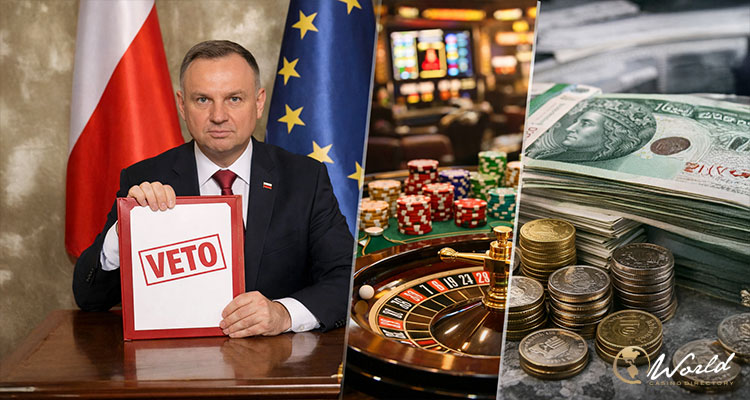
President Karol Nawrocki has exercised his veto power to stop a proposed increase in Poland’s gambling tax, preventing a rise in the levy on personal winnings from 10% to 15%. The decision blocks amendments to the Public Health Act and the Personal Income Tax Act that had been approved by Parliament earlier in December. While the legislative package also included changes to the country’s sugar tax, the president argued that both measures would have increased the financial burden on citizens at a time of mounting budget pressure.
Budget Concerns and Presidential Objections
The rejected amendments were framed by lawmakers as health-related initiatives, yet Nawrocki said their underlying purpose was fiscal. He linked the proposed tax changes to the government’s efforts to address a significant public finance shortfall, pointing to a deficit that has exceeded PLN240 billion after 11 months. In explaining his decision, the president reiterated a commitment he had previously made to voters regarding tax policy.
“In my Plan 21, I announced I would not sign any bills that raise taxes for Poles,” Nawrocki said.
When discussing the sugar tax element of the legislative package, Nawrocki expanded on his broader objections to the proposals. He stated that the government was seeking additional revenue to close a large budget gap rather than pursuing genuine health policy objectives.
“The goal … is obvious: to close the huge budget hole for which the government is responsible. After 11 months, we have a deficit of over PLN240 billion ($64.8 billion). Instead of tightening the tax system, the government is reaching into citizens’ pockets,” he said.
According to the president, the future of the proposed amendments to the Personal Income Tax Act now depends on further steps taken by Parliament. Under Poland’s legislative framework, lawmakers retain the ability to override a presidential veto if three-fifths of the Sejm vote in favor, provided at least half of its members are present. This means the gambling tax increase could still return to the agenda at a later stage.
Zbigniew Bogucki, head of the Chancellery of the President of the Republic of Poland, described the vetoes as a mechanism to prompt additional legislative effort rather than an outright rejection of reform.
“The president’s vetoes are constructive; they force the government to work,” Bogucki said.
He added that the outcome might have been different if the proposed tax revenues had been explicitly earmarked for health care spending.
“If these solutions had stipulated that all the money coming from the surplus of these taxes would go to health care, which is in a terrible state, then the President would probably have made a different decision. But this money was supposed to fill a huge budget hole that this government itself had dug,” Bogucki said.
Market Impact and Regulatory Considerations
The veto was welcomed by industry observers who see stability in tax policy as a key factor in maintaining the competitiveness of Poland’s regulated gambling market. Legal experts noted that higher taxes on player winnings could weaken licensed offerings and increase the appeal of unregulated alternatives.
As reported by iGaming Business, Marek Plota, an attorney at Wrocław-based RM Legal, said: “Avoiding a tax increase helps ensure that licensed products remain commercially attractive and limits incentives for players to seek alternatives in the grey market. From a market perspective, this contributes to regulatory stability and supports channelisation objectives.”
Concerns about unlicensed activity remain significant. Data from the Ministry of Finance show that more than 50,000 unlicensed gambling domains are currently listed on the national blacklist for operating in violation of Polish law. While private operators are permitted to offer sports betting services, Poland allows only one legal online casino, which is run by state-owned Totalizator Sportowy.
Authorities have recently intensified enforcement actions against illegal gambling, including measures aimed at influencers and payment providers associated with offshore operators. Against this backdrop, industry participants have argued that increasing the tax burden on consumers could undermine efforts to steer players toward regulated platforms.
The president’s decision also contrasts with developments elsewhere in Europe, where several governments have introduced higher gambling taxes in recent years, often targeting operators rather than individual players. In Poland, however, the current veto provides licensed operators with a temporary reprieve while leaving open the possibility of renewed debate in Parliament.
As lawmakers consider their next steps, attention is expected to remain on the balance between fiscal needs, consumer protection, and the long-term structure of the country’s gambling framework, including discussions anticipated in 2026 around Poland’s restrictive online casino regime.