

 United States
 Macau, China
 France
 Philippines
 Singapore
 Netherlands
 United Kingdom
 Canada
 Argentina
 Germany
 Estonia
 Peru
 Russia
 Australia
 South Africa
 Nigeria
 Malaysia
 Singapore
 India
 Finland
 China
 Ukraine
 Hong Kong
 Cyprus
 Turkey
 Greece
 Sweden
 South Korea
 Mexico
 Poland
 Ireland lottery results
 New Zealand lottery results
 Puerto Rico lottery results
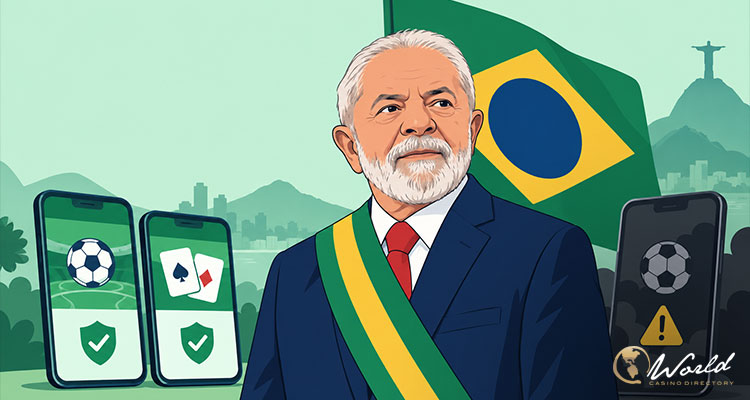
Luiz Inácio Lula da Silva’s re-election has added further pressure to Brazil’s betting sector, with licensed operators still offline under Provisional Measure 1,394 and no clear timetable for a return.
Lula secured a fourth presidential term after defeating Flávio Bolsonaro in the October 25 runoff with 51.75% of the vote. Betting companies had watched the election closely because Bolsonaro had taken a more supportive position toward the sector and won the first round.
The current shutdown stems from the provisional measure Lula introduced on September 25. Licensed betting websites were required to cease operations by October 6.
The measure can remain in force for up to 120 days unless Congress approves or rejects it earlier. Its legality is also being challenged before the Supreme Federal Court.
Shutdown Cuts Demand and Hits Licensed Operators
Major international groups affected by the measure include Flutter Entertainment and Entain, which operated Sportingbet in Brazil.
Flutter said last month that it was “extremely disappointed” and would “engage constructively with the Brazilian authorities on sensible, effective regulation to protect customers from the risks of the unregulated market”.
Entain said it was “disappointed” by a decision made “without consultation of industry stakeholders regarding its significant adverse consequences”.
Market data shows a sharp decline in online gambling demand since licensed operators went dark.
Blask reported that iGaming demand fell 13.3% week-on-week between October 19 and October 25. Its index dropped from 7.26 million before the ban to 288,000 during that period, a level last seen in 2019.
Demand was down 96% one month after the shutdown.
Blask said:
“Presidential elections finished on 25 October, with Lula da Silva as the winner… It means that iGaming will be offshore in the country for a long time.”
The platform added:
“The Brazilian president did a lot to make [the] Blask Index fall for more than a month.”
Offshore operators have not captured all of the missing activity. Blask said demand for offshore-based providers remained 9% below pre-ban levels.
Another estimate values Brazil’s illegal gambling market at around $25 billion.
Regulus Partners said:
“Unless and until some form of licensed offer does re-emerge from Lula’s electioneering, probably years from now, the black market will boom in Brazil as it already has from the October blackout.”
Congress and Supreme Court Remain Decisive
The election result leaves Lula’s government in place, but it does not settle the legal status of betting.
Congress can reject the provisional measure or amend it before it becomes permanent. One possible compromise would restore sports betting while continuing restrictions on online casino games.
Bolsonaro’s party also strengthened its position in Congress, potentially making it harder for Lula to secure approval for the measure in its current form.
The ANJL has challenged the ban before the Supreme Federal Court and is seeking its suspension.
ANJL Legal Counsel Bernardo Cavalcanti Freire said:
“I’m very optimistic. I think that what happened is completely illegal. But if we can get an intervention, then all the lights will return automatically.”
Luiz Felipe Maia, Founding Partner of MYLaw Advocates, suggested the industry may need to accept tighter conditions if regulated gambling returns.
“Online gaming is a little too much,” he said. “But are we willing to have higher responsible gaming standards, are we willing to have higher advertising restrictions and not allow certain types of games that have bad perception if we want to continue?”
Analysts have also raised the possibility of state-level licensing if the federal market remains closed.
As reported by Racing Post, Regulus said:
“This route will be messy, subject to challenge, and almost certainly restricted to state borders; it may also take years rather than months to develop a state market of scale, offering little hope for those with existing operations to protect.
“However, with Brazil’s federal government set for four years of gridlock, it might be time to warm up more pragmatic governors.”
Suppliers Also Feel the Impact
The disruption extends beyond operators.
Evolution CEO Martin Carlesund recently criticised the way the market was suspended.
“I think that everyone is flabbergasted about the situation in Brazil, that it is a total negative for anyone in this business that it happens in this way.
“It is very difficult to say where we will end up. We are working on it, and I have tried to do everything we can for our employees and everyone on the ground.”
Brazil’s regulated betting market therefore remains dependent on decisions outside the presidential election itself. Congress will determine whether the provisional measure survives in its present form, while the Supreme Federal Court could intervene through the legal challenges already filed.
For operators and suppliers, those proceedings will decide whether the market can reopen and under what conditions.
