

 United States
 Macau, China
 France
 Philippines
 Singapore
 Netherlands
 United Kingdom
 Canada
 Argentina
 Germany
 Estonia
 Peru
Peru Russia
 Australia
 South Africa
 Nigeria
 Malaysia
 Singapore
 India
India Finland
 China
China Ukraine
 Hong Kong
 Cyprus
 Turkey
 Greece
 Sweden
 South Korea
 Mexico
 Poland
 Ireland lottery results
 New Zealand lottery results
 Puerto Rico lottery results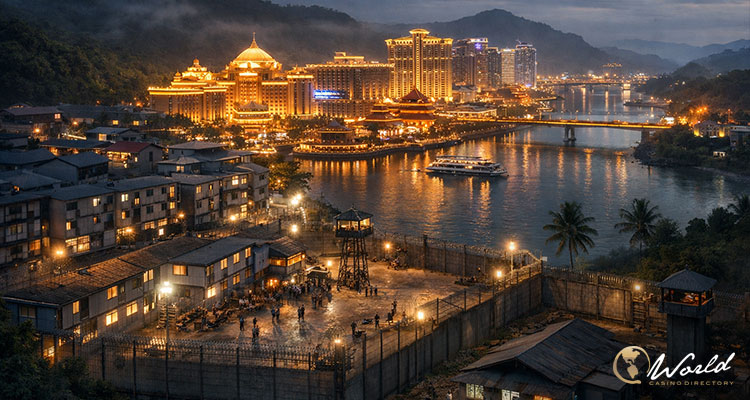
Casinos in Cambodia are facing renewed scrutiny after Amnesty International accused authorities of allowing venues linked to serious human rights abuses to continue operating with official approval. The organization’s findings suggest that a number of licensed casino complexes are connected to scamming operations where victims have reported forced labor, human trafficking, and torture.
The allegations come despite government claims that it is actively dismantling such operations, raising concerns about enforcement and regulatory oversight within the country’s gambling sector.
Report Links Casinos to Abuse Sites
Amnesty International said it identified at least a dozen casinos tied to scamming compounds across locations including Sihanoukville and border towns such as Poipet, Bavet, and Chrey Thum. According to the group, these sites have been associated with a range of abuses, including child labor and exploitation.
The organization based its findings on a combination of licensing documents issued by Cambodia’s Commercial Gambling Management Commission (CGMC), site visits, satellite imagery, and testimony from survivors. In several cases, victims were able to identify specific buildings within casino complexes where they were held.
“This research establishes a clear link between Cambodia’s licensed casinos and its scamming compounds,” said Montse Ferrer, Amnesty International’s co-regional director. “At a time when the government says it is dismantling the scamming industry, the evidence shows it is simultaneously recognizing the plans for casino properties where abusive scamming compounds are run.”
The report states that casino operators maintain control over facilities where abuses have taken place, reinforcing concerns that such activities are occurring within officially recognized properties.
Licensing Decisions Raise Questions
Amnesty International highlighted that several casino licenses were renewed or approved in late 2025 and early 2026, during a period when authorities had announced a nationwide crackdown on scam operations. The approved venues include multiple Crown-branded casinos in Poipet, Bavet, and Chrey Thum, as well as the Majestic Hotel & Casino and Majestic Two in Sihanoukville.
“The authorities must explain why casinos with documented links to trafficking and torture continue to receive official approval. Every day that these casinos remain licensed is another day in which people on casino property are at risk of being enslaved,” the organization said.
The report also identified additional sites such as the New Venetian Casino in Bavet, Casino Kyom, Marinan International, Peak Casino, Long Feng Xuan Casino, Huang Chao International, and Golden Sea Casino. Many of these operations have links to Cambodian companies with ties to China.
In one case, a former owner of the Majestic Hotel & Casino was charged in January 2026 with offenses including illegal recruitment for exploitation, fraud, and money laundering.
Survivor Testimonies Detail Conditions
Accounts collected by Amnesty describe individuals being lured to Cambodia through misleading job advertisements, only to be confined and forced to participate in online scams. Victims reported being held for extended periods and subjected to violence if they attempted to escape.
One survivor recalled: “The guards would enter the room and trigger the shock batons…it made a terrible sound. The children in the room were crying.”
Others described being forced to open bank accounts used for laundering money or being moved between different compounds. In one instance, a victim said he was held in multiple casino complexes before escaping by jumping from a building.
The organization noted that private security personnel often played a role in enforcing confinement, despite lacking legal authority to detain individuals outside limited circumstances.
Ongoing Concerns Over Enforcement
Amnesty’s findings build on a previous report from June 2025, which identified more than 50 scamming compounds across Cambodia operating as detention sites linked to organized criminal activity. Nearly half of those locations were associated with casino properties.
Although Cambodian authorities have reported arrests of more than 1,000 individuals during raids in several provinces, critics argue that enforcement efforts have not addressed the broader system enabling such abuses. The U.S. Department of State has also raised concerns, stating that the country has not reported prosecuting labor traffickers since 2022 and “does not fully meet the minimum standards for the elimination of trafficking and is not making significant efforts to do so.”
“The scale and industrialized nature of abuse documented in these Cambodian casinos makes clear that this is a high-risk sector that demands investigation and accountability at every level of the corporate chain,” Ferrer said.
Amnesty International has called for the immediate suspension of licenses for the casinos identified in its report and for a comprehensive investigation into the alleged violations. The organization also urged authorities to examine the role of operators, financiers, and property owners who may have been involved in or benefited from the activities.
The situation highlights ongoing tensions between regulatory oversight and enforcement in Cambodia’s gaming industry, as well as broader concerns about the protection of vulnerable individuals within rapidly expanding casino-linked operations.
