

 United States
 Macau, China
 France
 Philippines
 Singapore
 Netherlands
 United Kingdom
 Canada
 Argentina
 Germany
 Estonia
 Peru
Peru Russia
 Australia
 South Africa
 Nigeria
 Malaysia
 Singapore
 India
India Finland
 China
China Ukraine
 Hong Kong
 Cyprus
 Turkey
 Greece
 Sweden
 South Korea
 Mexico
 Poland
 Ireland lottery results
 New Zealand lottery results
 Puerto Rico lottery results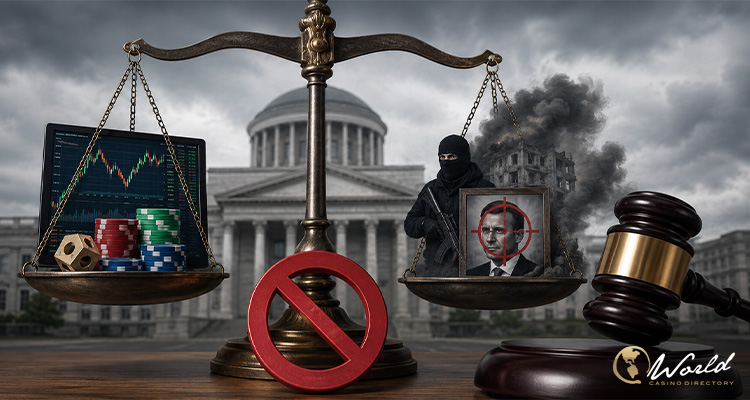
Federal regulators have released the first proposed rules for prediction markets, marking a significant step in overseeing a rapidly expanding sector of online derivatives trading. The U.S. Commodity Futures Trading Commission (CFTC) will now implement a framework to evaluate whether contracts are contrary to public interest and potentially illegal.
“The CFTC will protect the integrity of our regulated markets without standing in the way of responsible innovation,” said CFTC Chairman Michael Selig according to CNBC. “This proposal gives the Commission a durable, transparent framework to identify the contracts Congress directed us to scrutinize while letting legitimate markets move forward.”
Scope and Prohibited Activities
The proposal clearly bans contracts tied to terrorism, war, and assassinations, while leaving certain areas, such as gaming, less defined. The CFTC rule outlines a three-step process for disallowing contracts: first, confirming that the underlying event is actual; second, determining whether it falls under one of the categories enumerated in Section 5c(c)(5)(C) of the Commodity Exchange Act, including terrorism, assassination, war, gaming, or illegal conduct; and third, conducting a public interest analysis to decide if the contract should be prohibited.
“The proposed rulemaking defines ‘gaming’ as activity typically engaged in for recreation or to entertain others, governed by rules, with measurable occurrences or outcomes dependent on participants’ luck, skill, or athletic ability during the activity,” the CFTC text reads. Contracts based on elections or awards are explicitly excluded, as they are considered contests rather than gaming.
The new rules indicate that sports-related contracts may proceed, provided they do not hinge solely on chance. “Within gaming, the Commission aims to permit contracts settled on aggregate sports outcomes with objective data and integrity infrastructure, while prohibiting pure‑chance games and high‑risk sports-adjacent designs (e.g., injury, officiating‑only, discrete actions, altercations, pre‑collegiate events),” the proposal states.
Market Reactions and Opposition
The prediction markets industry, represented by platforms such as Kalshi and Polymarket, has grown substantially over the past year, allowing traders to speculate on elections, sporting events, and other real-world occurrences. The CFTC emphasizes that election wagers and many sports outcomes are likely not contrary to public interest. Sports markets, which account for the bulk of activity on these platforms, are structured more like financial swaps than traditional betting, granting the federal regulator primary jurisdiction.
However, several states and Native American tribes have opposed the rule, arguing that prediction markets effectively operate as illegal gambling. Bill Miller, president of the American Gaming Association, said, “This is a remarkable attempt to redefine what constitutes sports betting. It makes a mockery of Congressional intent while going against a bipartisan coalition of 41 attorneys general, countless legislators across the country and the 81% of voters who recognise that the so-called ‘prediction markets’ are backdoor sportsbooks evading state and tribal law.”
Meanwhile, industry groups have welcomed the proposal. The Coalition of Prediction Markets praised the CFTC for its “commitment to protecting consumers” while “empowering American markets.” Polymarket also expressed support, noting the initiative clarifies regulatory responsibilities and helps ensure federal oversight without stifling innovation.
Implementation and Next Steps
The CFTC proposal is now open for a 45-day public comment period. Less than 10% of the 3,500 submissions received during the prior advanced notice of proposed rulemaking provided detailed feedback, the agency reported. Following this window, the commission may revise the regulations and move toward finalizing the rule.
“The final version ultimately will be challenged in court, but whatever you think about event contracts, the existing rules are problematic,” wrote former CFTC general counsel Robert Schwartz. The ongoing legal battles and public commentary will shape how prediction markets operate under federal oversight, especially regarding the permissible scope of sports and gaming contracts.
The proposal represents the first concrete step to balance market innovation, consumer protection, and the integrity of U.S. financial markets while addressing long-standing legal ambiguities surrounding prediction contracts.
