

 United States
 Macau, China
 France
 Philippines
 Singapore
 Netherlands
 United Kingdom
 Canada
 Argentina
 Germany
 Estonia
 Peru
Peru Russia
 Australia
 South Africa
 Nigeria
 Malaysia
 Singapore
 India
India Finland
 China
China Ukraine
 Hong Kong
 Cyprus
 Turkey
 Greece
 Sweden
 South Korea
 Mexico
 Poland
 Ireland lottery results
 New Zealand lottery results
 Puerto Rico lottery results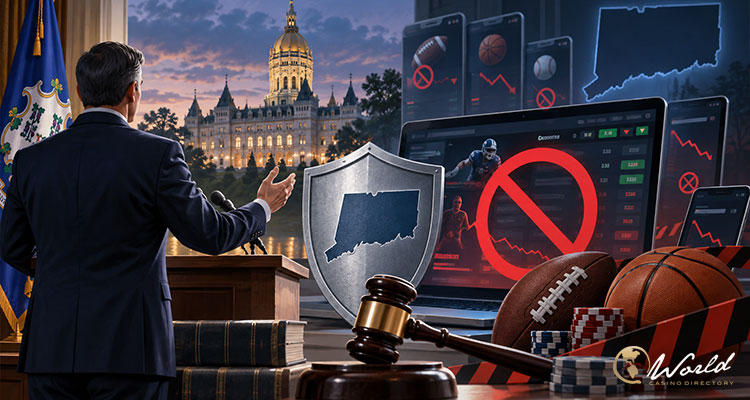
Connecticut has ordered nine prediction market companies to stop offering sports event contracts to residents as state officials increase enforcement against platforms they consider unlicensed sports betting operations.
The Connecticut Department of Consumer Protection (DCP) issued cease-and-desist orders to Polymarket, Coinbase, Crypto.com, Robinhood, ProphetX, Novig, Webull, Gemini and Underdog Predict. The department instructed each company to immediately stop advertising, promoting or making sports event contracts or other forms of unlicensed online gambling available to people in Connecticut.
The orders also require the affected platforms to let Connecticut customers withdraw funds they currently hold in their accounts. DCP warned that companies that fail to comply could face further measures, including civil penalties under the Connecticut Unfair Trade Practices Act or criminal penalties under state gaming laws.
The enforcement forms part of a broader investigation into prediction markets operating in Connecticut. DCP also sent nearly 30 subpoenas to businesses and media organisations that officials believe could hold information relevant to the investigation. The department stressed that recipients of the subpoenas are not themselves under investigation.
State Challenges Sports Contracts Offered as Prediction Markets
Prediction markets allow customers to buy and sell contracts based on whether a particular event will occur. Sports contracts commonly use yes-or-no outcomes, with the value changing as users trade positions before an event concludes.
Connecticut officials maintain that sports event contracts amount to sports wagering when offered to residents of the state.
“Our laws are clear: sports betting may only be offered by legal, licensed sportsbooks that adhere to our regulations and technical standards,” DCP Commissioner Bryan T. Cafferelli said in a press release issued by Governor Ned Lamont’s office.
Connecticut currently permits regulated sports wagering through DraftKings at Foxwoods and FanDuel at Mohegan Sun. Fanatics also offers sports betting through its relationship with the Connecticut Lottery.
State rules require sports betting customers to be at least 21 years old. Connecticut also prohibits wagering on its collegiate teams under circumstances covered by state law.
Officials allege that prediction market platforms have accepted wagers from people who fall outside those protections, including customers under 21 and individuals who placed themselves on Connecticut’s voluntary gambling self-exclusion list. The state has also accused the platforms of offering contracts involving Connecticut college sports.
Cafferelli said the scale of sports activity on prediction markets has increased concerns about younger customers.
“On the first day of the 2026 collegiate football season, one prediction market reported nearly $250 million in trading volume in college football. And the dollars show the youth is clearly at risk,” added Cafferelli.
The state cited an American Gaming Association estimate that prediction markets could process $40 billion in NFL wagers during the year.
Josh Shuart, chair of sports management at Sacred Heart University, also raised concerns about younger users becoming involved with the products.
“They are more prone to getting involved in it, not realizing the implications, become addicted and not being to get themselves out from under that,” Shuart said.
Nearly 30 Subpoenas Sent During Investigation
DCP expanded its investigation beyond the nine companies receiving cease-and-desist orders by seeking information from gaming service providers and media organisations. It also subpoenaed businesses involved with apps or payment services.
Nine licensed businesses received subpoenas, including PayPal, LexisNexis, Plaid and Paysafecard. Other recipients included Integrity Compliance 360, Sportradar Solutions, Genius Sports Media, Genius Tech International and identity verification provider Socure.
The department also sent subpoenas to 15 media organisations. Hearst Connecticut Media and WFSB were among the recipients, along with ESPN and several Connecticut news outlets. DCP said these organisations may possess relevant information while making clear that the subpoenas do not mean the businesses are targets of the investigation.
Apple App Store and Google Play also received subpoenas. The state sought information from Apple Pay, Google Wallet and Stripe as part of the same inquiry.
The dispute reflects a broader disagreement over how sports prediction contracts should be classified. Prediction market companies operate within a federal framework involving the Commodity Futures Trading Commission, while Connecticut authorities maintain that sports contracts offered to state residents must comply with Connecticut gambling law.
The nine companies covered by the cease-and-desist orders did not respond to requests for comment reported following the state announcement.
Kalshi Case Adds to Connecticut’s Legal Fight
Connecticut has separately pursued legal action involving Kalshi, one of the largest prediction market operators. The governor’s office said the state sought a court injunction earlier in September to prevent Kalshi from offering sports wagers without a state gaming licence.
A federal judge in Connecticut ruled in August that sports event contracts constituted illegal unlicensed gambling under the circumstances before the court and were not protected from state gambling regulation by federal commodities law.
Kalshi criticised Connecticut’s approach following the state’s latest announcement. The company argued that restricting federally supervised exchanges could direct consumers toward offshore platforms with fewer safeguards.
The prediction market dispute has developed as trading volumes tied to sporting events have grown. State officials have focused much of their response on differences between Connecticut’s licensed sports betting framework and platforms that describe their products as event contracts.
Connecticut has approximately 10,000 people on its voluntary self-exclusion list, according to information presented during the state’s enforcement announcement. Officials say regulated betting operators must comply with protections designed to prevent excluded customers from accessing gambling products.
The state has indicated that its investigation remains active, while the nine companies named in the cease-and-desist orders must stop making sports event contracts available to Connecticut residents and provide access to any customer funds held on their platforms.
