

 United States
 Macau, China
 France
 Philippines
 Singapore
 Netherlands
 United Kingdom
 Canada
 Argentina
 Germany
 Estonia
 Peru
Peru Russia
 Australia
 South Africa
 Nigeria
 Malaysia
 Singapore
 India
India Finland
 China
China Ukraine
 Hong Kong
 Cyprus
 Turkey
 Greece
 Sweden
 South Korea
 Mexico
 Poland
 Ireland lottery results
 New Zealand lottery results
 Puerto Rico lottery results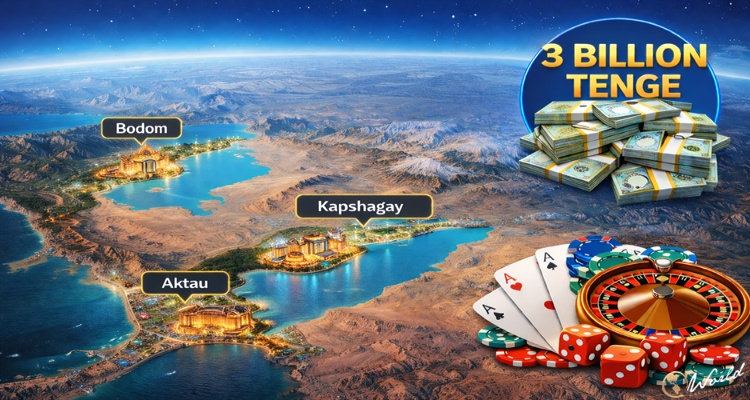
Kazakhstan is moving forward with plans to widen the geographic footprint of its regulated gambling industry, following the adoption of new legislation aimed at strengthening the tourism sector. The initiative, approved by lawmakers in late December, would allow casinos to operate in additional designated zones beyond the country’s current gambling areas. Officials say the effort focuses on drawing foreign visitors, increasing budget revenues, and supporting regional employment, while keeping gambling confined to tightly controlled locations.
The legislative changes were approved on December 29, when the Mazhilis passed the law “On Amendments and Additions to Certain Legislative Acts of the Republic of Kazakhstan Regarding Support for the Tourism Industry.” The measure enables the expansion of casino activity and authorizes the creation of new gambling zones designed primarily for international tourists. Existing legal gambling zones are currently located in Borovoye and Kapchagay, with gambling otherwise restricted to specific areas and regulated online platforms.
Regions Identified for New Gambling Zones
Minister of Tourism and Sports Yerbol Myrzabosynov said the government has already identified several regions where new casino zones may be established. Proposed locations reflect areas with established or developing tourism infrastructure.
According to information reported by QRNews, potential sites include the Caspian Sea coastline in the Mangystau Region, the shore of Lake Alakol in the Panfilov District of Zhetysu Region, the Talgar District in Almaty Region, and areas around Markakol as well as the Zaysan District in East Kazakhstan Region. While these areas have been named, authorities have not yet finalized exact plots of land.
Myrzabosynov explained that responsibility for selecting precise locations lies with local akimats, or regional executive authorities. This approach allows regional governments to assess infrastructure readiness and tourism potential before approving casino construction. Gambling remains legal only within designated zones, primarily around Almaty and Shchuchinsk, under Kazakhstan’s existing regulatory framework.
Economic Impact and Employment Expectations
Government officials have highlighted the expected fiscal contribution of each new casino as a central justification for the expansion. Speaking during a government briefing, Myrzabosynov stated, “A single casino can generate between 2 to 3 billion tenge in tax revenue for the budget and create approximately 500 jobs.” These figures align with broader estimates provided by the ministry, which place annual tax contributions per casino in the range of 2 billion to 3 billion tenge, equivalent to roughly $4.3 million to $6.5 million.
Beyond tax receipts, authorities point to employment as a key benefit for host regions. Each casino complex is expected to employ around 500 people, supporting local labor markets and related service industries. Officials believe these developments could stimulate both domestic and inbound tourism by combining gaming with other leisure and hospitality offerings.
Myrzabosynov has repeatedly emphasized that the policy aims to strengthen tourism rather than alter the tax treatment of the gambling industry. Addressing public speculation, he said, “There is no question of lowering taxes. Casinos pay taxes on every gaming table. Overall, annual tax contributions are expected to range from two to three billion tenge.” Similar wording was used in other public remarks, underscoring the government’s position that fiscal obligations will remain unchanged.
Tourism Strategy and Future Expansion
The Ministry of Tourism and Sports has framed the casino expansion as part of a broader tourism strategy modeled on practices used in other countries. Officials argue that placing gambling zones in scenic or resort-oriented areas can attract visitors while limiting social risks by confining gambling to approved locations.
Authorities have also signaled that the current list of gambling zones may not be final. Myrzabosynov noted that the government could authorize additional zones later if the initial sites prove effective in supporting tourism growth. “These zones have been determined for now, but they may be expanded in the future, all in the interest of developing tourism,” he said.
For now, attention has shifted to regional administrations, which will determine exact sites within the approved areas. As those decisions move forward, Kazakhstan’s government maintains that it will balance economic development goals with strict regulation, keeping gambling activity limited to clearly defined zones.
