

 United States
 Macau, China
 France
 Philippines
 Singapore
 Netherlands
 United Kingdom
 Canada
 Argentina
 Germany
 Estonia
 Peru
Peru Russia
 Australia
 South Africa
 Nigeria
 Malaysia
 Singapore
 India
India Finland
 China
China Ukraine
 Hong Kong
 Cyprus
 Turkey
 Greece
 Sweden
 South Korea
 Mexico
 Poland
 Ireland lottery results
 New Zealand lottery results
 Puerto Rico lottery results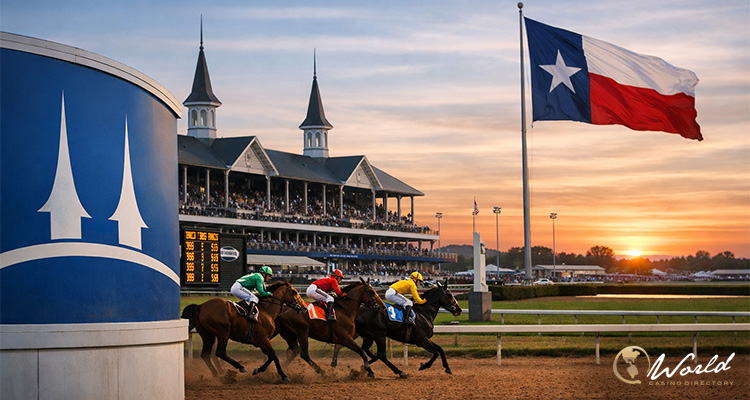
In a development that has caught the attention of both sports betting enthusiasts and regulators, TwinSpires has re-entered the Texas market, offering online wagering on horse racing to state residents. This marks the first time since 2013 that the Churchill Downs Inc.-owned platform has allowed Texans to place advance deposit wagers (ADW) on races. The re-entry follows a favorable ruling by the U.S. Sixth Circuit Court of Appeals, which effectively loosened restrictions on interstate wagering. However, Texas regulators are not taking the move lightly and have swiftly issued a cease-and-desist order, signaling that the legal battle over ADW in the state may be far from over.
TwinSpires’ Legal Victory Opens the Door to Texas
TwinSpires, known for offering online betting on horse races across North America, ceased its operations in Texas more than a decade ago after the Texas Racing Commission (TRC) enforced a law that required all wagering to be conducted in person. This restriction, dating back to 1986, was amended in 2011 to prohibit all forms of telephone and online gambling within the state.
However, a 2025 ruling by a federal appeals court in Michigan, where TwinSpires had been in a legal dispute with state regulators, changed the landscape for the operator. The court ruled that the federal Interstate Horseracing Act, which governs interstate betting, overrides state law in this area. Judge Hala Y. Jarbou, who issued the decision, stated, “If a state decides to allow pari-mutuel wagering, it cannot invade the Interstate Horseracing Act’s exclusive regulatory scheme for accepting interstate off-track wagers.” This ruling essentially opened the door for TwinSpires to resume ADW services in states like Texas, where live racing is prevalent but online betting has been restricted.
The decision was hailed by TwinSpires, which has since quietly allowed Texas residents to place wagers on races through its platform. While there has been no public announcement of the move, Texans have begun posting on social media about their ability to access the site and place bets again.
Texas Responds with a Cease-and-Desist Order
Just days after TwinSpires resumed operations, the Texas Racing Commission sent a cease-and-desist order to the platform, demanding it stop accepting wagers from Texas residents. The letter, dated February 7, 2026, outlined the state’s concerns that TwinSpires was violating local racing regulations by processing wagers from outside the confines of licensed racetrack facilities.
According to Horse Racing Naton, the TRC’s interim executive director, David Holmes, warned that failure to comply with the order could lead to penalties, including fines of up to $10,000 per violation, suspension or revocation of licenses, and potential criminal liability. The commission has made it clear that Texas law prohibits online betting, and any activity that circumvents these restrictions would face legal consequences.
Despite the TRC’s efforts, TwinSpires’ legal team is likely to argue that the federal ruling in Michigan establishes a precedent that could allow them to operate in Texas under similar terms. The operator’s renewed presence in Texas is seen by many as a test case for the broader application of the Interstate Horseracing Act and its ability to preempt state laws that restrict online sports betting.
Texas, with its large population and vibrant horse racing scene, has long been considered an untapped market for online gambling operators. The state ranks second in population in the U.S., with 31.7 million residents, making it an attractive market for platforms like TwinSpires. Additionally, Texas is home to multiple live horse racing venues, which creates a ready market of existing bettors.
For TwinSpires, the Texas market offers a significant opportunity to expand its customer base. Prior to its exit in 2013, the platform had been offering betting services to Texas residents, and its return is expected to generate considerable revenue for both the platform and the state’s racing industry. However, the battle over whether such operations should be allowed will likely continue to unfold in the courts, with potential consequences for both TwinSpires and the broader U.S. sports betting landscape.
As of now, it remains unclear how Texas lawmakers will respond to the resurgence of online betting in the state. The legal framework for sports betting in Texas remains ambiguous, with many unresolved issues surrounding sweepstakes casinos and prediction markets, which have also raised regulatory concerns. While states like Virginia have moved forward with legalizing college sports betting, Texas has yet to fully embrace online wagering, and regulatory bodies are actively working to address these challenges.
