

 United States
 Macau, China
 France
 Philippines
 Singapore
 Netherlands
 United Kingdom
 Canada
 Argentina
 Germany
 Estonia
 Peru
Peru Russia
 Australia
 South Africa
 Nigeria
 Malaysia
 Singapore
 India
India Finland
 China
China Ukraine
 Hong Kong
 Cyprus
 Turkey
 Greece
 Sweden
 South Korea
 Mexico
 Poland
 Ireland lottery results
 New Zealand lottery results
 Puerto Rico lottery results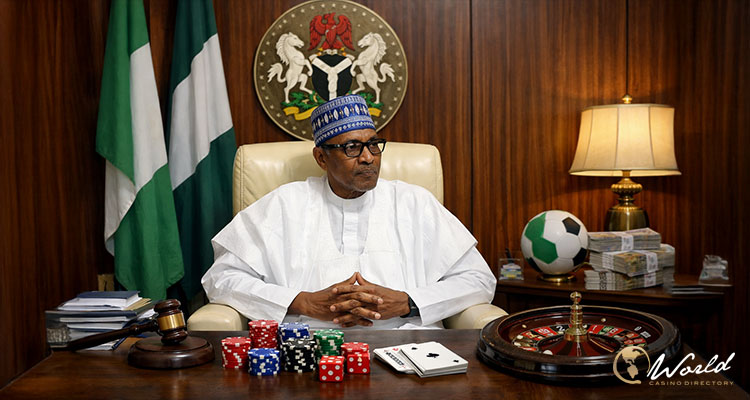
President Bola Ahmed Tinubu has publicly stated that he will not give presidential assent to Nigeria’s Central Gaming Bill, reinforcing his view that the regulation of lottery and gaming activities lies outside the constitutional authority of the federal government. The declaration, cited by The Nation, was made during the All Progressives Congress (APC) National Executive Committee meeting held in Abuja, where party leaders, governors, and federal lawmakers were in attendance.
The bill, which was passed by the National Assembly on December 2, seeks to establish a centralized federal framework for regulating lottery and gaming across Nigeria’s states and the Federal Capital Territory. Its passage has triggered widespread objections from state governments, legal practitioners, and gaming regulators, particularly in Lagos State, which has been at the center of earlier constitutional litigation on the matter.
President Emphasizes Constitutional Boundaries
Addressing party stakeholders, President Tinubu framed his opposition around constitutional limits on federal power. He described himself as a firm adherent to democratic principles and stressed that his office must operate within defined legal boundaries. Speaking directly to those supporting the bill, he said, “I know where my constitutional powers start and where they end.”
Tinubu urged party members to revisit the Constitution, making clear that lottery and gaming fall under residual matters reserved for state governments. He told the gathering: “What I want you to forget is centralised lotto. Go and read the Constitution again. It is a residual matter. Residual matters belong to the legislative authority of the states.”
The president also warned against further attempts to advance the legislation, signaling an end to debate on the issue. “Don’t tread near it. There’s no need for us to argue. I am a constitutional democrat. Lottery, lotto law, centralised lotto, gaming, whatever it is, I have read it. I know it is coming, and I won’t sign it,” he said.
In a separate address reported from the same meeting, Tinubu reiterated his stance in similar terms, stating: “What I want you to forget is a centralised lotto,” while advising lawmakers to “go and read the constitution again.” He later concluded, “I am a constitutional democrat. Lotteries, lottos, lotto laws, gaming — centralised or whatever it is you call it, I’m not going to sign such [a bill] into law. Thank you very much and have a good evening.”
Legal Background and Lagos State’s Position
Opposition to the Central Gaming Bill intensified following a Supreme Court judgment delivered on November 22, 2024, which nullified the National Lottery Act. The apex court ruled unanimously that the National Assembly lacked the constitutional authority to legislate on lottery and gaming, classifying them as residual matters under state jurisdiction.
In response to the new bill, Lagos State, through its Attorney-General and represented by Chief Wole Olanipekun (SAN), wrote to the Attorney-General of the Federation, Prince Lateef Fagbemi (SAN), cautioning against presidential assent. The letter argued that signing the bill would contradict an existing Supreme Court judgment.
Olanipekun expressed concern that the National Assembly proceeded with new legislation despite the court’s ruling. He wrote: “We are further informed that the said legislation purports to repeal the National Lottery Act, as if it were an existing law that had not already been nullified by the Supreme Court. For emphasis, and as rightly acknowledged by your good self at the commencement of the Supreme Court legal year, the National Lottery Act ceased to exist as law on November 22, 2024, when the Supreme Court delivered its judgment in SC.1/2008. The National Assembly cannot subsequently purport to repeal what is no longer in existence.”
The letter also noted that the bill seeks to regulate online gaming and cross-border gaming activities while proposing a revenue distribution mechanism managed by the federal government rather than payments into the Consolidated Revenue Fund, a move Lagos argues runs contrary to constitutional provisions.
Reactions From State Regulators and Legal Experts
State gaming authorities have welcomed Tinubu’s declaration. The Federation of State Gaming Regulators of Nigeria, representing 24 states, has consistently opposed the bill, describing it as a rebranded version of the repealed National Lottery Act. The Lagos State Lotteries and Gaming Authority praised the president’s position, stating, “Today, His Excellency Bola Ahmed Tinubu, GCFR, has unequivocally reaffirmed that gaming and lottery regulation is a residual matter reserved for the states, in line with the constitution.”
Legal analysts have also weighed in. Earlier, Obinna Akpuchkwu, a gaming law expert, described the legislative effort as “unconstitutional” and “unfounded,” adding, “The current attempt to enact the Central Gaming Bill into law will only be a wasted effort.”
With Tinubu’s firm refusal to sign the bill, stakeholders across Nigeria’s gaming sector view the matter as settled, particularly as the industry enters a traditionally busy period toward the end of the year.
