

 United States
 Macau, China
 France
 Philippines
 Singapore
 Netherlands
 United Kingdom
 Canada
 Argentina
 Germany
 Estonia
 Peru
Peru Russia
 Australia
 South Africa
 Nigeria
 Malaysia
 Singapore
 India
India Finland
 China
China Ukraine
 Hong Kong
 Cyprus
 Turkey
 Greece
 Sweden
 South Korea
 Mexico
 Poland
 Ireland lottery results
 New Zealand lottery results
 Puerto Rico lottery results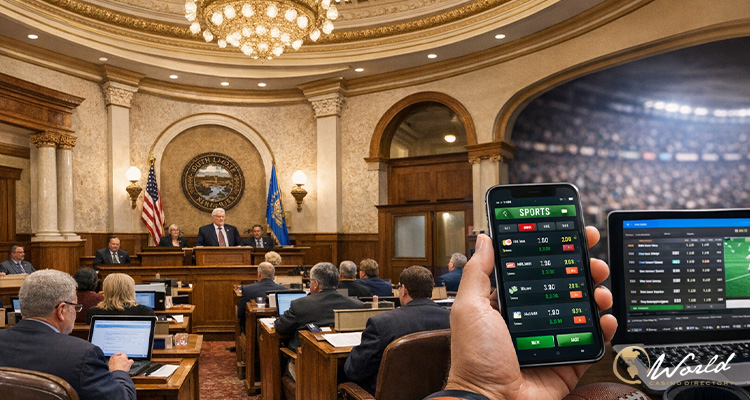
The South Dakota Senate has approved a proposal that would allow residents to decide whether to permit mobile sports wagering statewide, moving the question closer to the November ballot. Lawmakers voted 23-10 to pass Senate Joint Resolution 504, setting up a potential constitutional amendment that would expand sports betting beyond its current limits.
If the House also gives its approval, voters will weigh in on the measure Nov. 3. The resolution does not require a signature from Gov. Larry Rhoden to appear on the ballot; a simple majority in both chambers will suffice.
Lawmakers Outline Path to Statewide Mobile Wagering
Senate Joint Resolution 504, introduced and co-sponsored by Sen. Casey Crabtree, would authorize online sports betting through a constitutional amendment. South Dakota voters previously amended the constitution in 2020 to permit sports betting exclusively at commercial casinos in Deadwood and at two tribal casinos outside the city. The new proposal follows a similar approach, placing the decision directly before voters.
Under the resolution, lawmakers would determine regulatory details if the amendment succeeds. The measure does not specify a tax rate for online wagering or lay out consumer protection standards. Instead, the Legislature would craft those policies after voter approval.
“If they [voters] say yes, this body gets to decide every detail on how this works and gets to place in every guardrail and every safety net that you find necessary,” Crabtree told Senate members during Wednesday’s hearing according to South Dakota Searchlight.
The resolution directs 90% of tax revenue from mobile sports betting toward reducing property taxes. Crabtree emphasized that point during debate.
“The proposal in front of you is about property tax relief,” continued Crabtree. “It ultimately puts more money in the pockets of hard-working South Dakotans. This revenue is already being generated in our state, but it is leaving our borders and going to the benefit of surrounding states.”
According to the South Dakota Department of Revenue, property taxes in the state totaled $1.7 billion in 2024. Current law imposes a 9% tax on retail sports betting conducted at casinos. Lawmakers expect that any eventual online wagering tax rate would exceed that percentage, though the resolution leaves the exact figure open.
Supporters Cite Revenue and Border Competition
Several senators argued that mobile wagering would keep gambling dollars within state lines. Sen. Steve Kolbeck, a Republican from Brandon, noted that residents can easily travel to neighboring states such as Iowa and Wyoming, where online betting is legal statewide. He pointed out that the Grand Falls Casino sits just across the Iowa border, drawing South Dakotans who want to place legal mobile wagers.
Kolbeck told colleagues that authorizing online betting could encourage residents to stay in their own communities to dine and watch games instead of crossing state lines.
He compared the proposal to a previous tax dispute involving online retailers, calling it “as another Wayfair decision,” a reference to the U.S. Supreme Court ruling that allowed states to require out-of-state sellers to collect sales tax.
“This is us having revenue out there that we’re not collecting, just like when Amazon was new, we had to go get that,” Kolbeck said. “We had to adjust as a state. Now we have this situation that this body needs to react to and adjust to so that revenue can come back into our state coffers.”
Supporters also framed the amendment as a way to regulate activity they believe is already occurring. Sen. Amber Hulse, a Republican from Hot Springs, backed the resolution and spoke about adding consumer protections if voters approve it. She said lawmakers could establish measures such as betting limits and easier access to addiction hotlines.
“You can’t legislate morality, but guess what? These people are already doing it,” Hulse said, noting that a member of her own family participates in mobile sports betting.
“[South Dakotans] are already doing it on the black market,” said Hulse. “They’re already potentially making bets that are hurting their families more. So why don’t we put some guardrails on it and help protect some families so that there aren’t as many harms being done by this, especially to our communities?”
Hulse added that while directing tax proceeds toward property tax relief would help, it “isn’t going to probably do a lot.”
Opponents raised concerns about tying property tax reductions to revenue from gambling, which they described as potentially addictive.
Ballot Landscape Taking Shape
With Senate approval secured, the resolution now heads to the House for further consideration. If representatives sign off, voters will see the proposed constitutional amendment on the November ballot.
South Dakota voters are already scheduled to consider at least four constitutional amendments this fall, all referred by the Legislature during the previous winter session. The Secretary of State’s Office has also approved three additional proposed amendments for circulation. Those measures could qualify for the ballot if supporters gather enough signatures from registered voters.
The outcome of the House vote will determine whether online sports betting joins that list of questions for South Dakotans to decide.
