

 United States
 Macau, China
 France
 Philippines
 Singapore
 Netherlands
 United Kingdom
 Canada
 Argentina
 Germany
 Estonia
 Peru
Peru Russia
 Australia
 South Africa
 Nigeria
 Malaysia
 Singapore
 India
India Finland
 China
China Ukraine
 Hong Kong
 Cyprus
 Turkey
 Greece
 Sweden
 South Korea
 Mexico
 Poland
 Ireland lottery results
 New Zealand lottery results
 Puerto Rico lottery results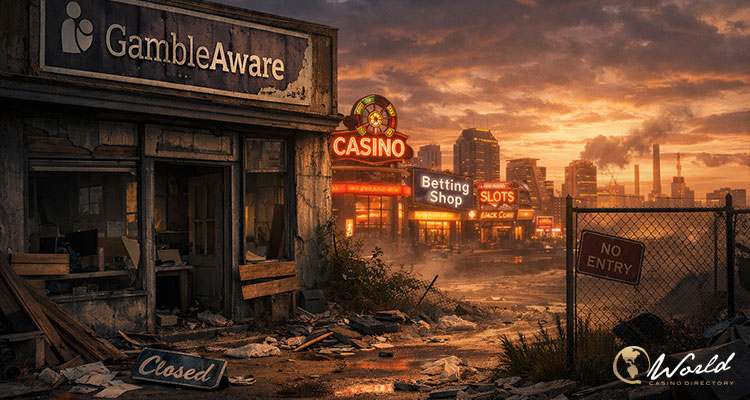
The closure of GambleAware on March 31 signals a major shift in how gambling-related harm is managed across the United Kingdom. After more than two decades of operation, the organization has ceased activity, with its responsibilities transitioning to a new system led by public institutions.
This change follows the introduction of a statutory levy on gambling operators, marking a departure from a model that relied on voluntary contributions distributed through independent charities. Under the new framework, funding, oversight, and service delivery move directly into state-managed structures.
Transition to State-Controlled Funding Model
The revised system introduces mandatory financial contributions from gambling operators, set between 0.1% and 1.1% of gross gambling revenue. These funds are allocated across research, prevention, and treatment of gambling harm.
Public bodies now take on defined roles within this structure. UK Research and Innovation handles research funding, the Office for Health Improvement and Disparities oversees prevention, and NHS England manages treatment services. Oversight sits with the Department for Culture, Media and Sport.
This replaces a system where charities such as GambleAware directed industry donations. Policymakers had raised concerns about transparency and accountability under the previous arrangement. The new model centralizes financial control and aligns gambling harm with broader public health systems.
Around £120 million in operator contributions is expected to be distributed under the updated framework.
The transition has not progressed without disruption. Funding decisions for treatment services were communicated shortly before the new system came into effect, leaving limited time for organizations to respond.
Some established charities did not secure funding under the new structure, creating uncertainty about service continuity. A stabilization fund has been introduced to support affected organizations for a short period, allowing them to manage staffing, refer cases, and explore alternative funding.
Several stakeholders raised concerns about the process and its impact on individuals seeking help. Jordan Lea, CEO of Welsh harms charity Deal Me Out, said: “It was completely disorganised and unprofessional and put service users at risk. That’s not a good start to the system and not a good sign of things to come. Its just mind blowing.”
Other treatment providers reported confusion about how to direct individuals requiring support. One source described the situation by saying: “My concern today is for those people ringing. What do you do with these people who are at crisis end? And it is an awful thing to say ‘we can’t help you, go somewhere else’ – without actually knowing what that looks like.”
Another added: “We don’t know who to signpost to… I felt quite deflated when the news came in at five to five yesterday.”
These responses highlight uncertainty within the sector as it adjusts to the new funding structure.
GambleAware’s Role and Ongoing Debate
GambleAware had played a central role in the UK’s approach to gambling harm, particularly since 2018 when it became the main commissioning body for treatment and research services. It also contributed to the development of the National Gambling Support Network, which supported more than 110,000 individuals.
The organization helped establish a framework that connected operators, treatment providers, and public health initiatives. At the same time, its reliance on voluntary industry funding attracted criticism, with questions raised about independence and oversight.
The charity also advocated for a statutory levy, although the final system differs from the model it supported.
Its closure reflects both external policy changes and internal positioning during the transition. The move to a government-led system leaves behind the hybrid structure that previously combined private funding with independent distribution.
Financial and Sector Pressures Intensify
The changes arrive alongside broader financial pressures affecting the gambling sector. From April 1, Remote Gaming Duty increased from 21% to 40%, adding further cost considerations for operators already adjusting to the levy.
Economic conditions also play a role. Rising living costs may increase demand for support services, placing additional pressure on the newly structured system to deliver consistent access and care.
According to Off The MRKT, some stakeholders question whether public institutions can replicate the coordination previously provided by established charities. Concerns remain about how services will be delivered, how funding decisions will be managed, and whether gaps may emerge during the early stages of implementation.
One industry observer commented on the uncertainty surrounding the framework: “I can’t see how it’s working strategically, to be honest. You look at it all at face value and ask the question, what are they commissioning against?”
