

 United States
 Macau, China
 France
 Philippines
 Singapore
 Netherlands
 United Kingdom
 Canada
 Argentina
 Germany
 Estonia
 Peru
Peru Russia
 Australia
 South Africa
 Nigeria
 Malaysia
 Singapore
 India
India Finland
 China
China Ukraine
 Hong Kong
 Cyprus
 Turkey
 Greece
 Sweden
 South Korea
 Mexico
 Poland
 Ireland lottery results
 New Zealand lottery results
 Puerto Rico lottery results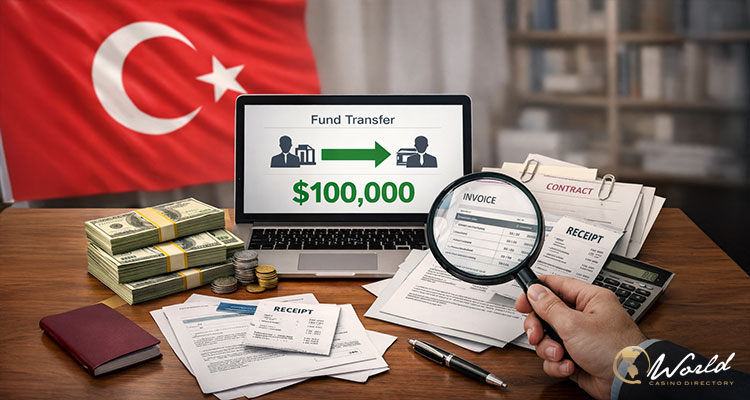
Turkey will introduce stricter oversight of high-value financial transactions while banks escalate warnings to customers as part of a coordinated campaign against illegal gambling and related financial crime. New banking rules set to take effect in 2026 coincide with expanded prosecutorial powers and broader enforcement measures that place financial institutions at the center of government scrutiny.
Under a regulation issued by Turkey’s Financial Crimes Investigation Board (MASAK), banks must collect detailed information for transfers of 200,000 Turkish liras and above starting Jan. 1, 2026. The rule applies to both individuals and corporate account holders and requires banks to document the origin of funds and the stated purpose of each transaction. Generic or vague explanations will no longer be accepted for transfers above the threshold.
Customers must select a defined reason for sending money, such as loan-related payments or gambling-linked transactions. When none of the listed categories apply, senders must submit a written explanation describing the nature of the transfer. MASAK will also intensify monitoring of cash movements, increasing disclosure obligations as transaction values rise.
For deposits or withdrawals reaching 20 million liras, banks must request supporting documents, including property title deeds. Authorities have framed the measures as aligned with international standards designed to separate routine banking activity from large-scale movements that pose elevated risks of financial crime. Officials have linked the new framework to ongoing efforts to counter money laundering, terrorism financing, illegal betting, and the broader informal economy.
Expanded scrutiny places banks under direct obligations
The tightening of transfer rules comes as Turkish banks begin issuing direct legal warnings to customers over involvement in illegal online gambling. The notices follow authorization from Justice Minister Yılmaz Tunç under an AKP-led “Action Plan” that calls for all state institutions to cooperate in “eradicating illicit gambling,” a pledge backed by President Recep Tayyip Erdoğan.
The warnings began after the Ministry of Justice approved the 11th Judicial Package on Dec. 15, introducing wide-ranging changes to enforcement powers, according to Hürriyet Daily News. Prosecutors can now order asset seizures, suspend accounts, and pursue cases tied to financial crime and transactions linked to illegal betting. Amendments to the Penal Code raise prison terms and financial penalties for individuals and organized groups engaged in such activities.
Banks and payment organizations face new compliance duties aimed at disrupting the financial channels that support unlicensed betting. Participants and intermediaries risk higher fines, broader confiscation, and temporary freezes on bank or digital payment accounts for up to 48 hours during investigations. Financial institutions must also respond to official “cooperative demands” by providing transaction data, account records, and payment histories within 10 days or face administrative penalties or criminal liability.
Announcing the reforms, Tunç said the government intended to close loopholes that allowed illegal betting networks to operate “unpunished and at scale.” He added, “Illegal betting and online gambling are not only crimes, but also channels that finance organized crime and cause serious social harm.”
MASAK coordination and widening enforcement scope
MASAK leads the enforcement drive, working with prosecutors and the Interior Ministry to track suspicious transfers across banks, payment intermediaries, and digital wallets. Tunç has emphasized the role of financial intelligence in the strategy, stating, “Our objective is to identify illegal activity at its source, follow the money and intervene before criminal proceeds are concealed or transferred abroad.”
Authorities highlighted the scale of the campaign in December, when investigators detained 42 suspects in an illegal betting probe involving transactions exceeding TL6bn (€140m). The operation included seizures of bank accounts and cryptocurrency wallets and reinforced official assessments that illegal betting has evolved into a major organized financial crime threat.
Major lenders including Ziraat Bankası, Türkiye İş, and Garanti BBVA issued the first customer warnings during the Christmas period, signaling a sector-wide rollout. The compliance framework will extend to mobile payment applications and digital wallet providers, placing fintech platforms under the same reporting and disclosure standards as traditional banks.
Media investigations and focus on 2026
Enforcement has also reached the media sector. Authorities targeted GAİN Medya, linked to Anahat Holding, amid allegations involving illegal betting, organized crime, and money laundering. Senior executives were arrested, and the Savings Deposit Insurance Fund was appointed trustee to seven affiliated companies. Investigators carried out asset seizures covering movable and immovable property, financial accounts, and corporate holdings.
Officials have described the case as evidence of a broader shift that now includes media, advertising, and distribution networks accused of sustaining demand for illegal gambling services. Looking ahead, the Ministry of Justice has reaffirmed support for legislative amendments where needed to maintain pressure on financial crime.
While early efforts focused on domestic activity, MASAK and the ministry have confirmed that international cooperation will form the next phase. Authorities have signaled closer scrutiny of jurisdictions alleged to host operators targeting Turkish consumers, including Cyprus, Georgia, North Macedonia, and Armenia. President Erdoğan has reiterated a policy of zero tolerance, warning that enforcement will intensify through 2026, with dismantling illegal gambling networks framed as a priority before the next general election.
