

 United States
 Macau, China
 France
 Philippines
 Singapore
 Netherlands
 United Kingdom
 Canada
 Argentina
 Germany
 Estonia
 Peru
Peru Russia
 Australia
 South Africa
 Nigeria
 Malaysia
 Singapore
 India
India Finland
 China
China Ukraine
 Hong Kong
 Cyprus
 Turkey
 Greece
 Sweden
 South Korea
 Mexico
 Poland
 Ireland lottery results
 New Zealand lottery results
 Puerto Rico lottery results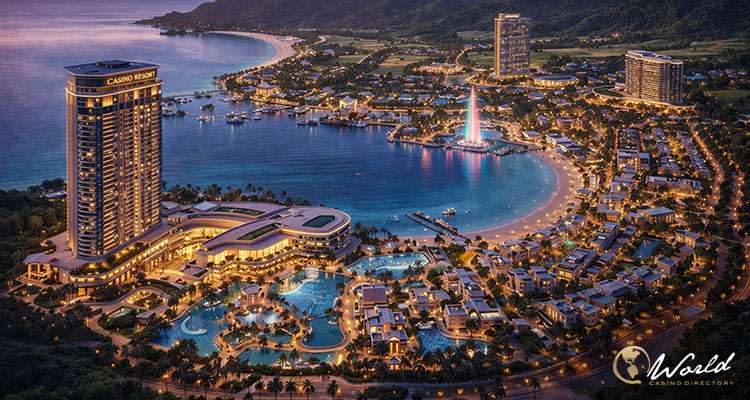
Hoiana Resort & Golf in central Vietnam has outlined plans for a significant expansion that will introduce new hospitality, entertainment, and retail projects as part of its second development phase. Executives described the updated strategy during a recent dialogue with Da Nang city authorities and business representatives, confirming that the large-scale resort will add new facilities after the completion of its initial phase.
Phase 2 Will Introduce Expanded Hotel and Event Capacity
Phase one began operations in 2020 with more than 1,200 hotel rooms and several key tourism assets, including an 18-hole golf course that has hosted international tournaments. It also features a foreigner-only casino with 140 gaming tables and more than 270 electronic gaming machines, currently the largest table allocation in Vietnam. Investor information indicates that Hoiana has injected US$1.4 billion into phase one.
The resort presently employs nearly 2,700 workers, and over 98% are Vietnamese with average monthly earnings of approximately VND15 million (US$570). Management expects employment to increase considerably as development progresses.
Developers stated that phase two will receive an additional US$1 billion investment. The plan includes more than 1,000 new five-star hotel rooms, 198 beachfront villas, a family-focused retail and entertainment area, and a second golf course linked to a training academy issuing international certifications. Executives also highlighted a multi-purpose international convention center with a seating capacity for up to 2,500 guests, adding a major MICE component to the property.
The expansion strategy intends to create over 2,000 additional jobs and contribute more than VND2 trillion (US$76.15 million) in annual tax revenue once complete. The resort is also planning to introduce what it describes as Vietnam’s first outlet mall combined with a duty-free shopping center, establishing a new retail format for the domestic market.
According to Theinvestor.vn, Nguyen Vinh Tran, CEO of Hoi An South Development Co., Ltd., said in remarks presented at the dialogue that the next stage of development supports regional tourism priorities. Tran explained that the plan aligns with Da Nang’s ambition to strengthen its position as a center for events, sports, shopping, and luxury travel, while enhancing competitiveness with international destinations.
Developers Emphasize Destination Positioning
Hoiana occupies approximately 985 hectares with a total planned investment of around US$4 billion and is scheduled to be developed across seven phases with final completion targeted for 2029. The second phase is expected to span roughly 209 hectares, according to project information previously disclosed by developers.
Recent leadership changes have accompanied the acceleration in development. Alan Teo, formerly of Resorts World Sentosa and NUSTAR, was appointed CEO as part of a broader strategy to refine the resort’s positioning. In comments at an industry summit, Teo noted that “when Hoiana first opened during COVID times, the focus was casino first, then the destination, but we have changed our focus to market the destination first, then the casino for foreigners.”
Teo added that foreigner-only casino models must address several key considerations to attract players. He outlined three factors for success: “One is the purpose of visit, so the destination must be able to create that purpose of visit for people to want to fly to that country and make their way to their destination. Two is ease of travel. How easy is it for someone to book a flight and to travel from the airport to their destination? And three is safety – whether your country is safe to travel in.” He said the resort has leveraged its golf facilities as a travel motivator and cited Vietnam’s safety reputation and proximity to the airport as competitive strengths.
Local tourism indicators have also improved. Da Nang recorded more than 17 million visitors in 2025, including 7.6 million international travelers, a year-on-year increase of 25%. Authorities have identified green tourism, sports tourism, and MICE travel as emerging priorities. Domestic investment in the city reached VND215.2 trillion (US$8.19 billion) in 2025, up nearly 2.7 times from the previous year, while foreign investment totaled more than US$520 million.
The resort site, originally located in Quang Nam province, has since been merged into Da Nang. Hoiana’s developers anticipate that the expansion will reinforce the city’s growing tourism sector and support its efforts to engage new segments linked to sports and business travel.
